

WHEEL ALIGNMENT
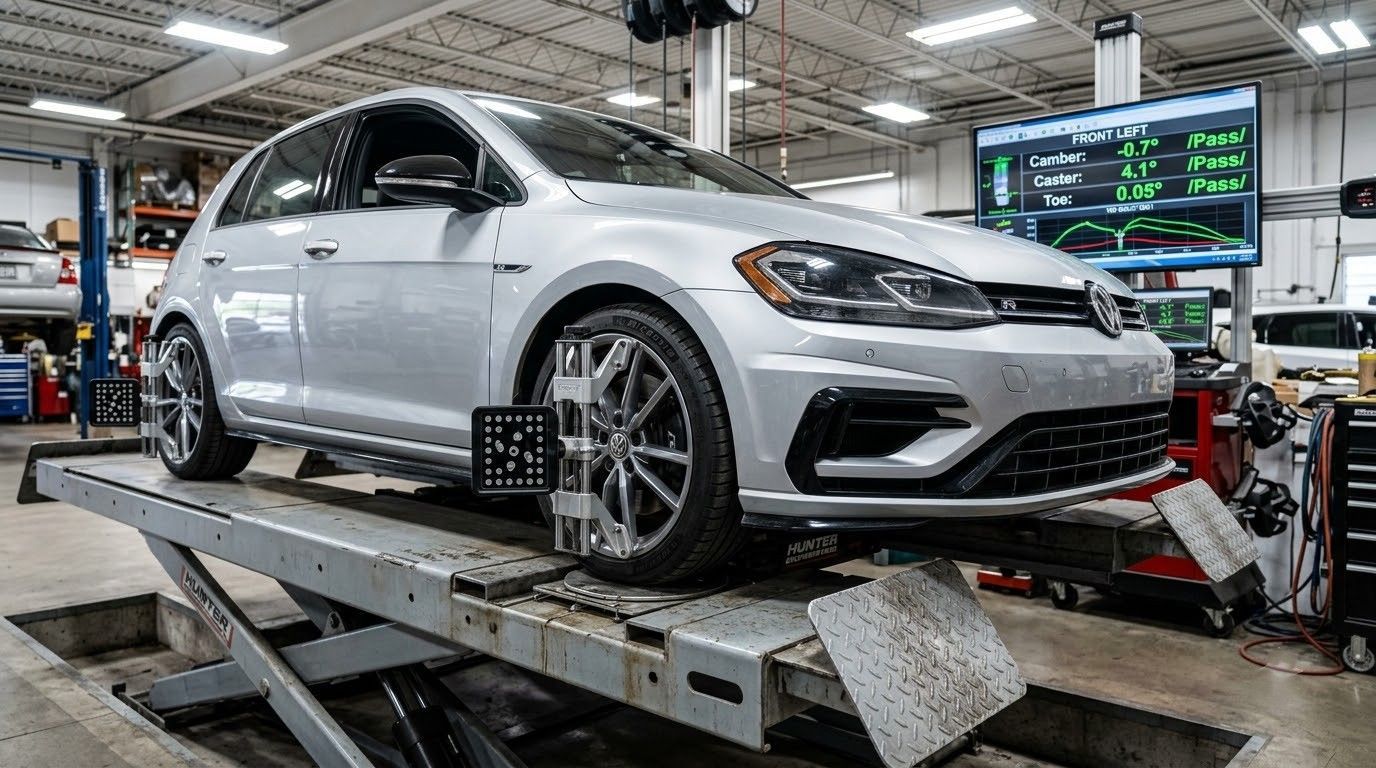
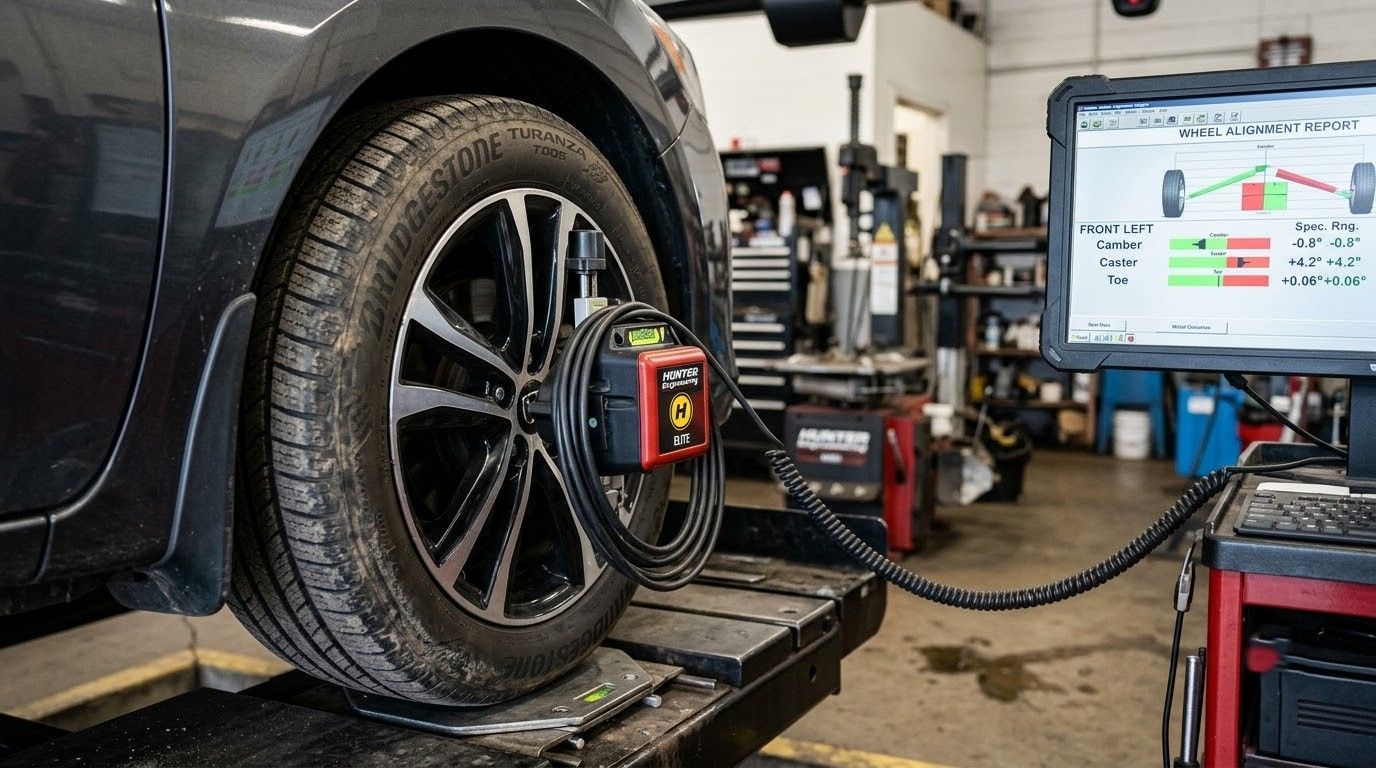
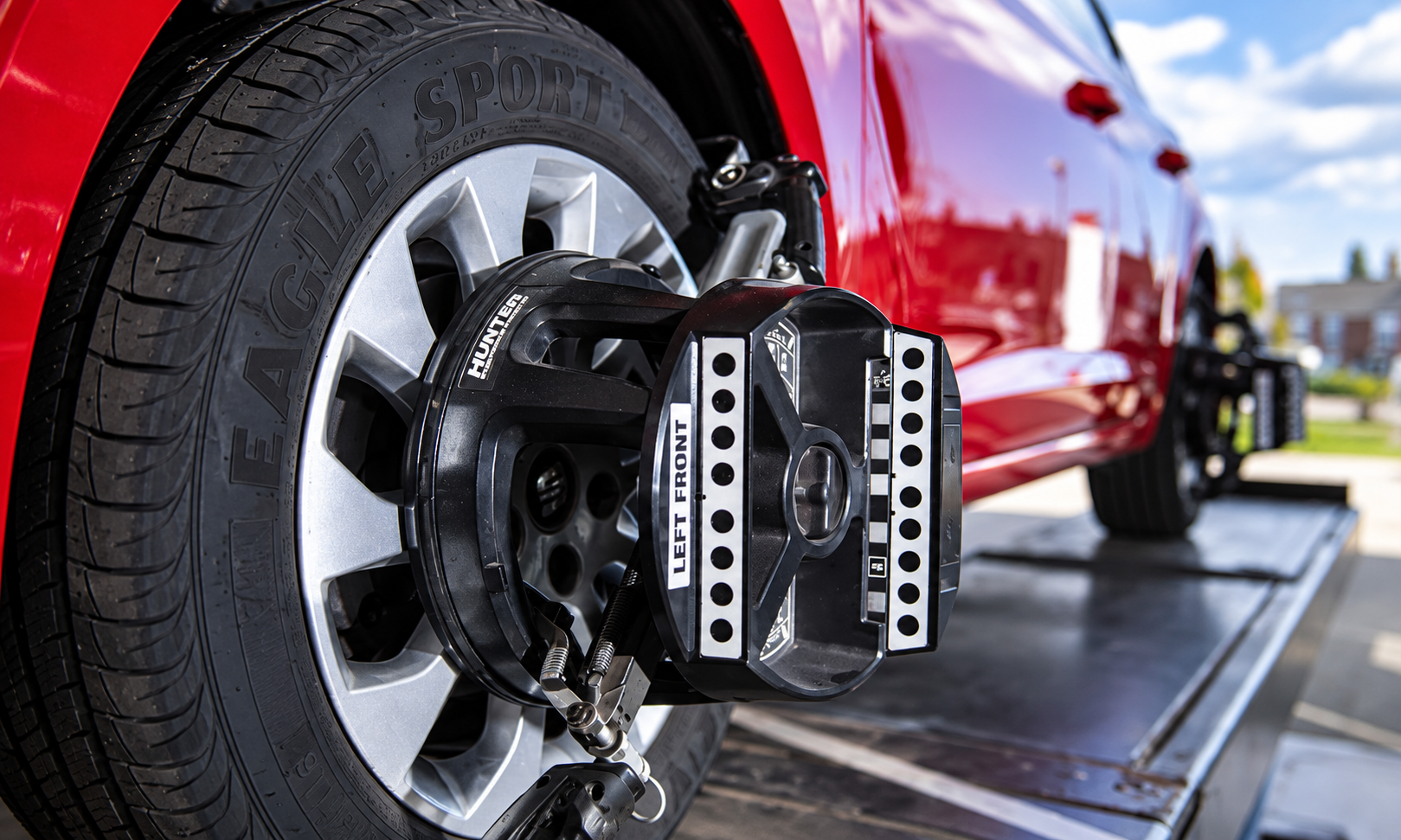
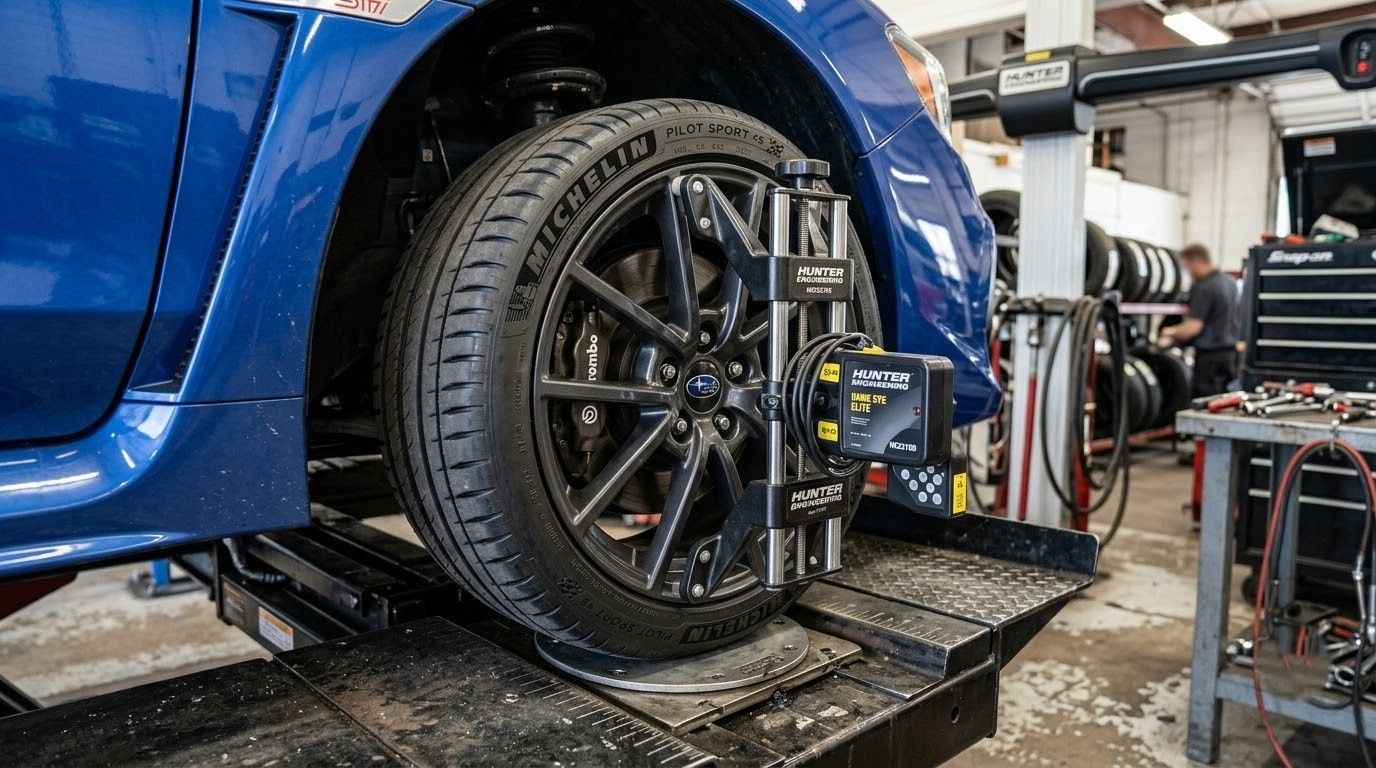
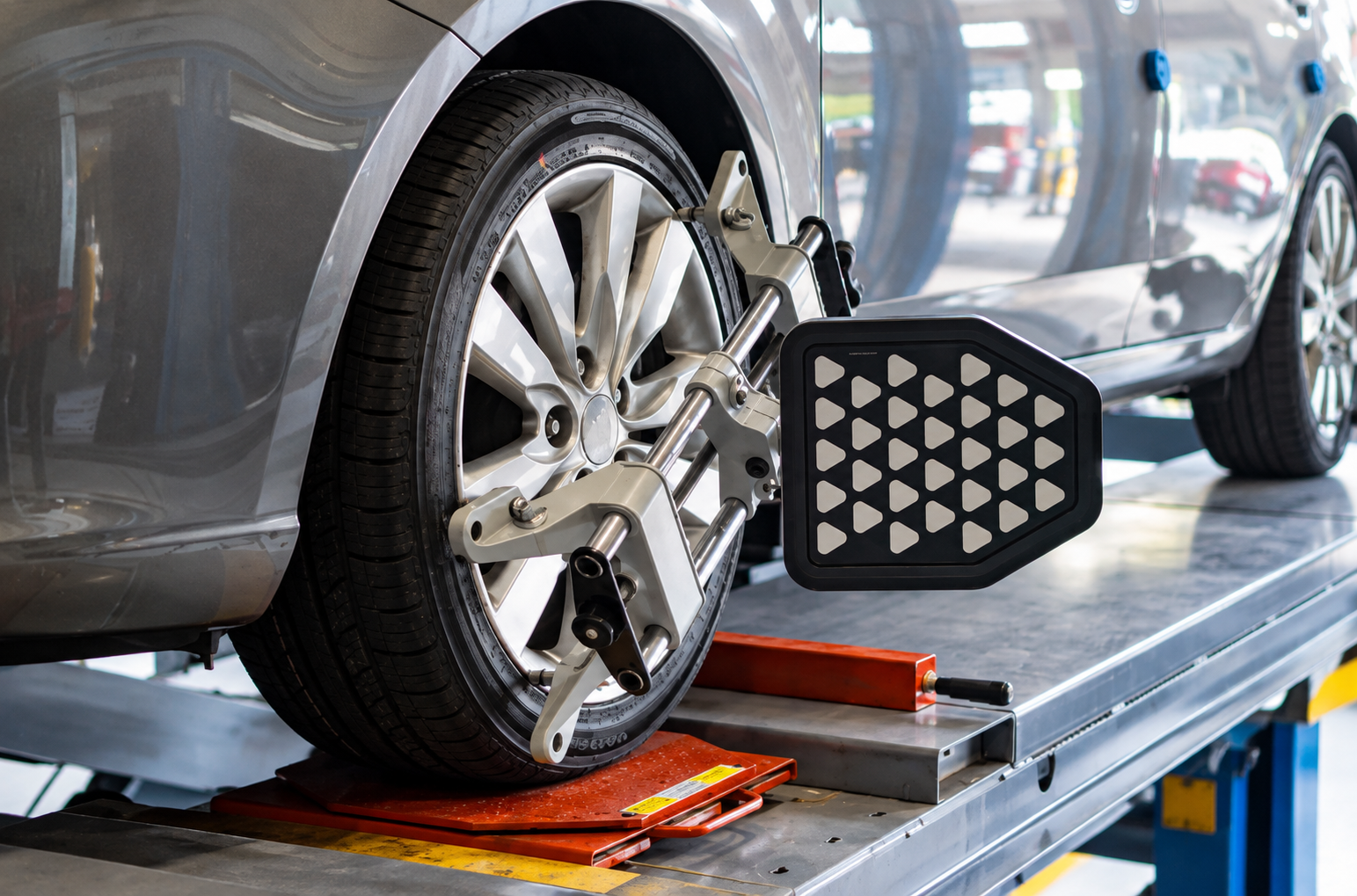
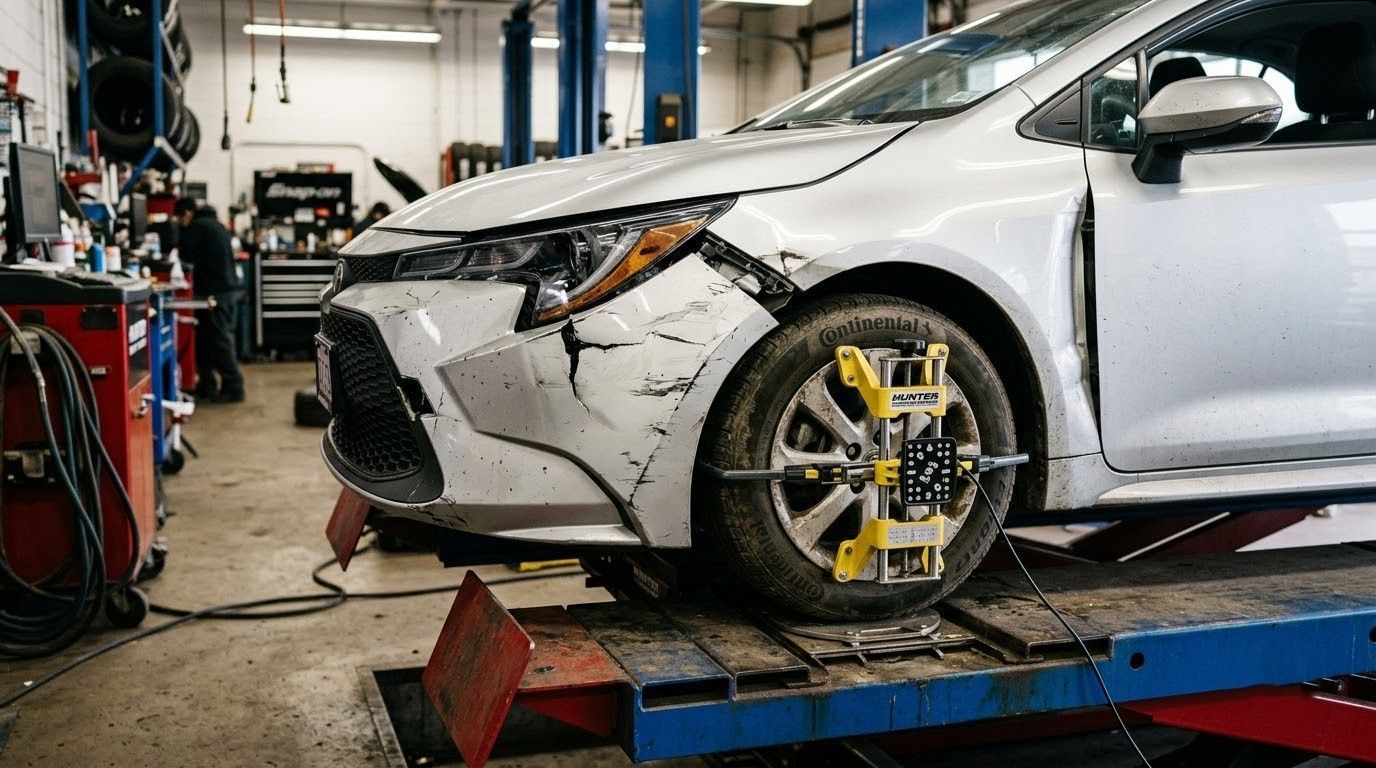
- Camber, caster, and toe measured
- Angles compared against factory tolerance
- Manufacturer specifications, not generic settings
- Most alignments need no replacement parts
our services
THE WORD ON OUR WORK
How often should I have a wheel alignment done?
Roughly every 6,000 miles or once a year, whichever arrives first. Add a check after fitting new tires, after any collision, and after a pothole strike hard enough to make you wince.
What is the difference between camber, caster, and toe?
Camber is wheel lean seen from the front, caster is the steering axis angle seen from the side, and toe is the direction the tires point relative to each other. Toe affects tire wear most.
Do I need a four-wheel alignment or just the front?
Suspension design decides it. Vehicles with adjustable rear angles need all four wheels set, and Luke's Alignment & Auto Repair measures every vehicle in Chesterton, IN before recommending which alignment it actually requires.
Why is my steering wheel off center after an alignment?
Because toe was corrected without splitting it evenly between the two tie rods. The vehicle tracks straight but the wheel sits crooked, and it is fixed by adjusting both sides together.
Can worn suspension parts be aligned around?
Not reliably. Loose tie rod ends, tired bushings, or a failing ball joint let angles move as the vehicle drives, so those components get inspected and replaced before any adjustment is worth making.
What does uneven tire wear tell you about alignment?
Wear on one edge points at camber, feathering across the tread points at toe, and wear on both edges usually means underinflation instead. Reading the pattern narrows the diagnosis before the rack confirms it.
Does an alignment fix a vibration at highway speed?
Usually not. Vibration at speed points at wheel balance or a bent rim, while alignment shows up as pulling and uneven wear. Luke's Alignment & Auto Repair checks both together in Chesterton, IN.
Will an alignment improve my fuel economy?
Slightly, yes. Tires dragging against each other add rolling resistance the engine works against continuously, and removing that drag returns a small but real gain along with noticeably smoother steering.
Step-01
LISTEN TO HOW IT DRIVES.
Step-02
CHECK TIRES AND PRESSURES FIRST.
Step-03
INSPECT STEERING AND SUSPENSION.
Step-04
MEASURE ALL FOUR WHEELS.
Step-05
ADJUST TO MANUFACTURER SPECIFICATION.
Step-06
ROAD TEST AND PRINT THE RESULTS.
✓ All four wheels measured on the rack
✓ Steering and suspension inspected first
✓ Angles set to manufacturer specification
✓ Steering wheel centered properly
✓ Before and after readings printed
✓ Tire wear patterns read and explained