
Short black horizontal line on a white background

TIRE BALANCING

Wheel imbalance measured in grams is enough to shake a steering wheel at highway speed, which is why manufacturers put a balance check on the maintenance schedule around every 7,000 miles. Luke's Alignment & Auto Repair handles that correction at our Broadway Avenue shop, and this page explains the symptoms we look for, how our balancing equipment measures each wheel, where the weights go, and what balanced wheels return to drivers in Chesterton, IN, from steadier steering to better fuel economy.
Two workers in hard hats crouch on a rooftop, working on the roof structure under a cloudy sky.
Person carrying wooden planks on a rooftop under a blue sky
A SHUDDER AT SPEED IS NOT SOMETHING YOU LIVE WITH.
Most drivers learn to hold the wheel tighter and ignore the buzz that shows up around sixty. That shudder is mass distribution, not a mystery. Each wheel and tire assembly carries slight variation, and once the assembly spins fast enough, the heavy spot throws the whole corner out of rhythm. We measure that variation instead of guessing at it. Putting it right is small, precise work. Our machine reports how much weight a rim needs and exactly where it belongs, and we fit those weights to the inside of the rim before spinning the wheel to confirm.
  • Every wheel spun and measured
  • Weights fitted inside the rim
  • Balance rechecked after correction
  • Licensed technicians on every job
Black horizontal line on a white background.
TIRE BALANCING
WHAT BALANCE MEANS FOR A CAR THAT LIVES ON I-94.
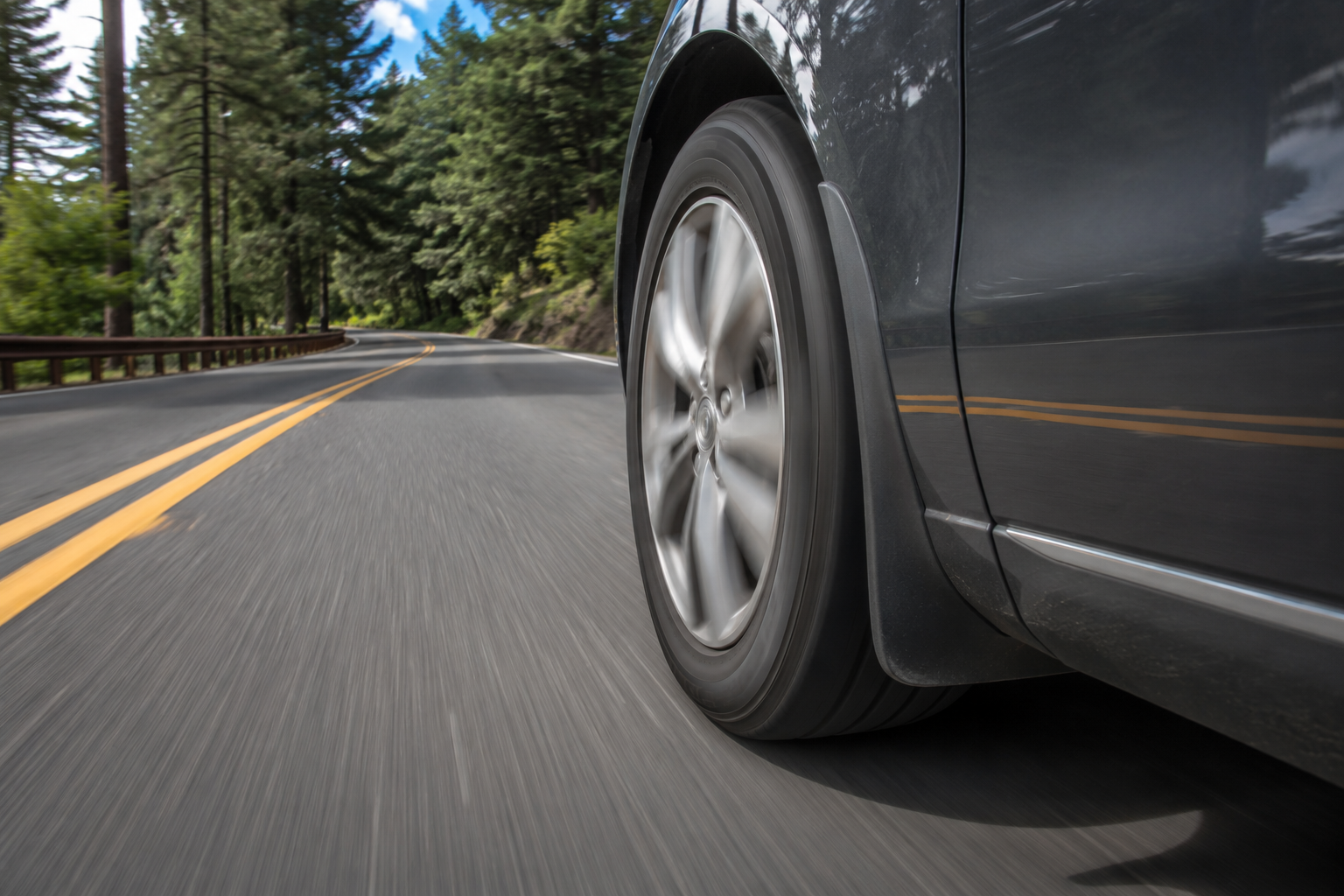
Commuters running I-94 and US 20 spend long stretches above fifty, which is precisely where an unbalanced assembly does its damage. The vibration works through bearings, tie rod ends and shock mounts, and it scrubs flat patches into tread that had thousands of good miles left. Catching the imbalance early costs a fraction of what the parts it wears out will cost, and the ride quality returns immediately.
POTHOLE SEASON MOVES WEIGHTS AND WE FIND THEM.
Freeze and thaw cycles open holes on Indiana 49 every spring, and a hard strike can knock a wheel weight clean off the rim or bend the rim itself. Drivers usually notice a week later when the wheel starts humming. Bringing the vehicle in after a bad hit lets us check each assembly, replace what came loose, and confirm the rim still runs true.
STEERING WHEELS SHOULD SIT STILL AT SEVENTY.
That standard has not changed in 40 years of balancing wheels on Broadway Avenue, and it is the only test that matters once the car is back on the road. Machines report numbers, but a road test tells us whether the correction actually took. Our technicians drive the vehicle after every balance, at the speed where the complaint appeared. Would you rather be told it is fixed, or feel it?
WHY CHOOSE US FOR TIRE BALANCING.
Black car on a car lift icon
Steady At Highway Speed
Vibration that appears at sixty and worsens at seventy is our most common complaint, and we do not sign the job off until the wheel sits quiet at that speed.
Black car on a car lift or jack icon
Grams, Not Guesswork
Balancing equipment tells us the precise weight each rim needs and the position it belongs in. Nothing gets added by feel, and nothing gets added where it does not help.
Black car on a lift or jack stand icon
Quieter Tire Noise
Humming from the tires often traces back to imbalance rather than a failing bearing. Sorting the balance first removes the cheap cause before anyone quotes you for the expensive one.
Black car icon on a car lift
Fuel Economy Restored
Rolling resistance climbs when an assembly fights its own weight. Correcting the balance lets each tire roll the way it was designed to, which shows up at the pump over the following weeks.
Black car on a car lift or jack stand icon
Every Wheel Comes Off
Each assembly gets inspected off the vehicle, not glanced at in the wheel well. Bent rims, missing weights and damaged sidewalls turn up during that step more often than drivers expect.
Black car icon on a car lift, symbolizing vehicle maintenance or inspection
A Risk-Free Estimate
You know the figure before we touch a wheel. Our estimate costs nothing, carries no obligation, and covers the whole set rather than one corner presented as a starting price.
Black horizontal line on a white background

our services

OUR TIRE BALANCING WORK
Every visit covers more than spinning four wheels. Below is what the work actually includes, from the initial inspection of each assembly through weight correction on the rim and the road test that proves it worked.
Person carrying wooden planks on a rooftop under a blue sky
WHEEL CHECK
Wheel and Rim Inspection

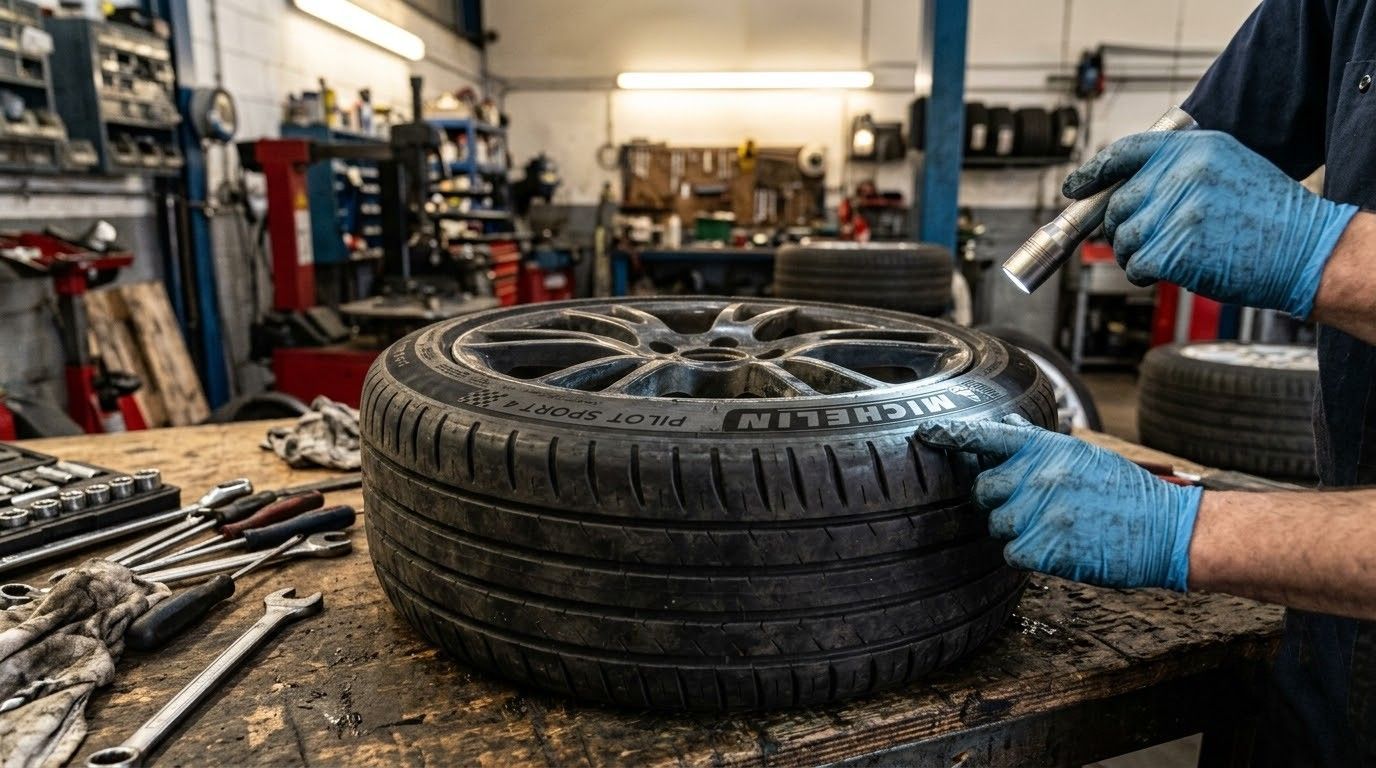
Before anything spins, each wheel comes off for a look at the rim face, the bead seat and the tire itself. A bent rim or a separated belt will never balance, no matter how much weight goes on.
Two workers in hard hats repairing a shingled roof under a cloudy sky.
SPIN TEST
Dynamic Wheel Balancing

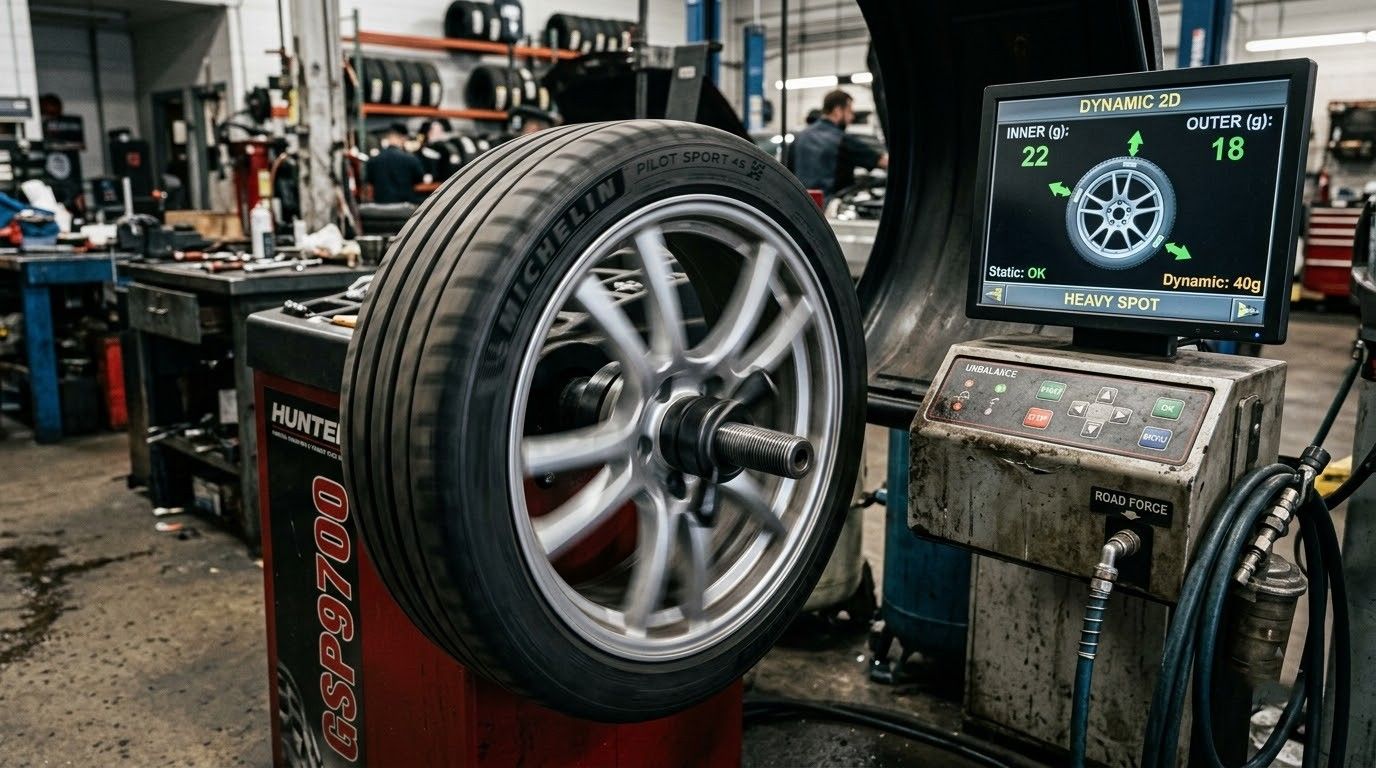
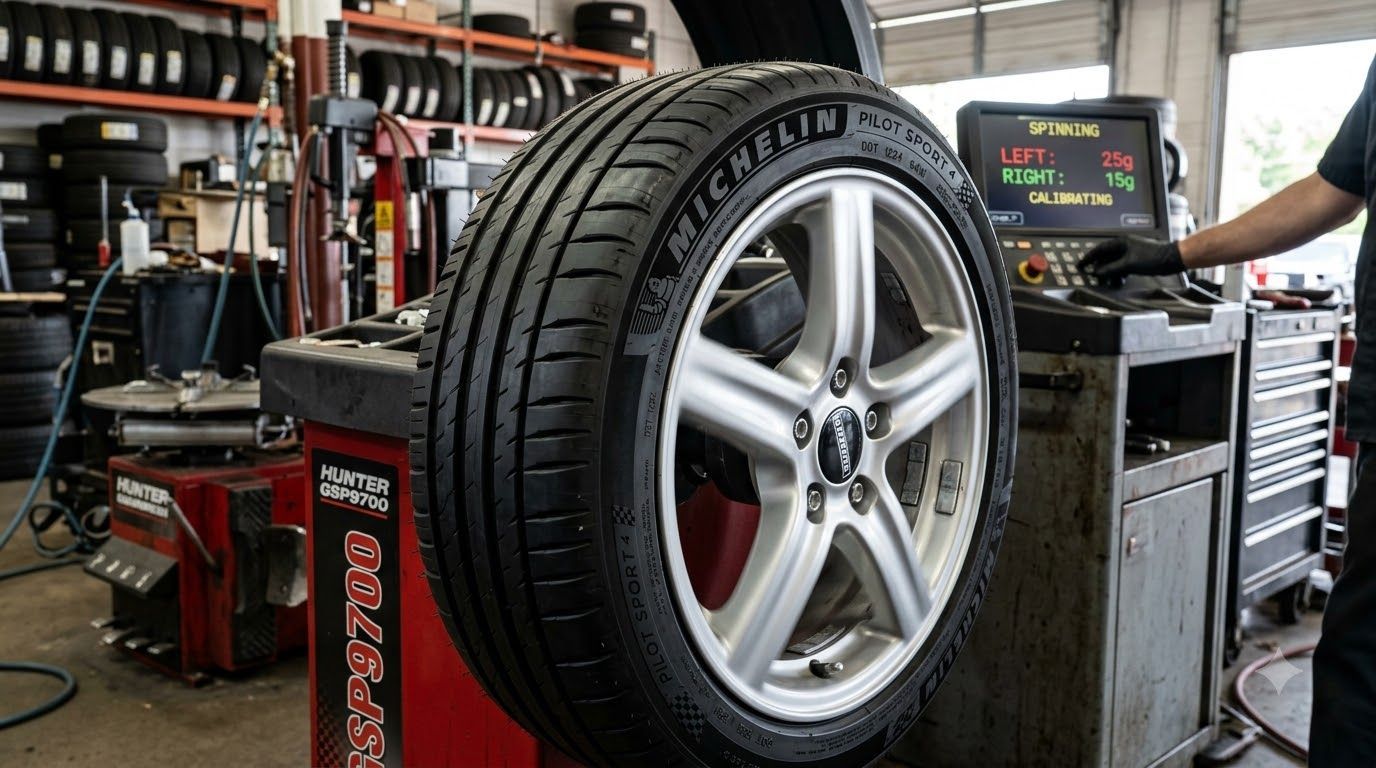
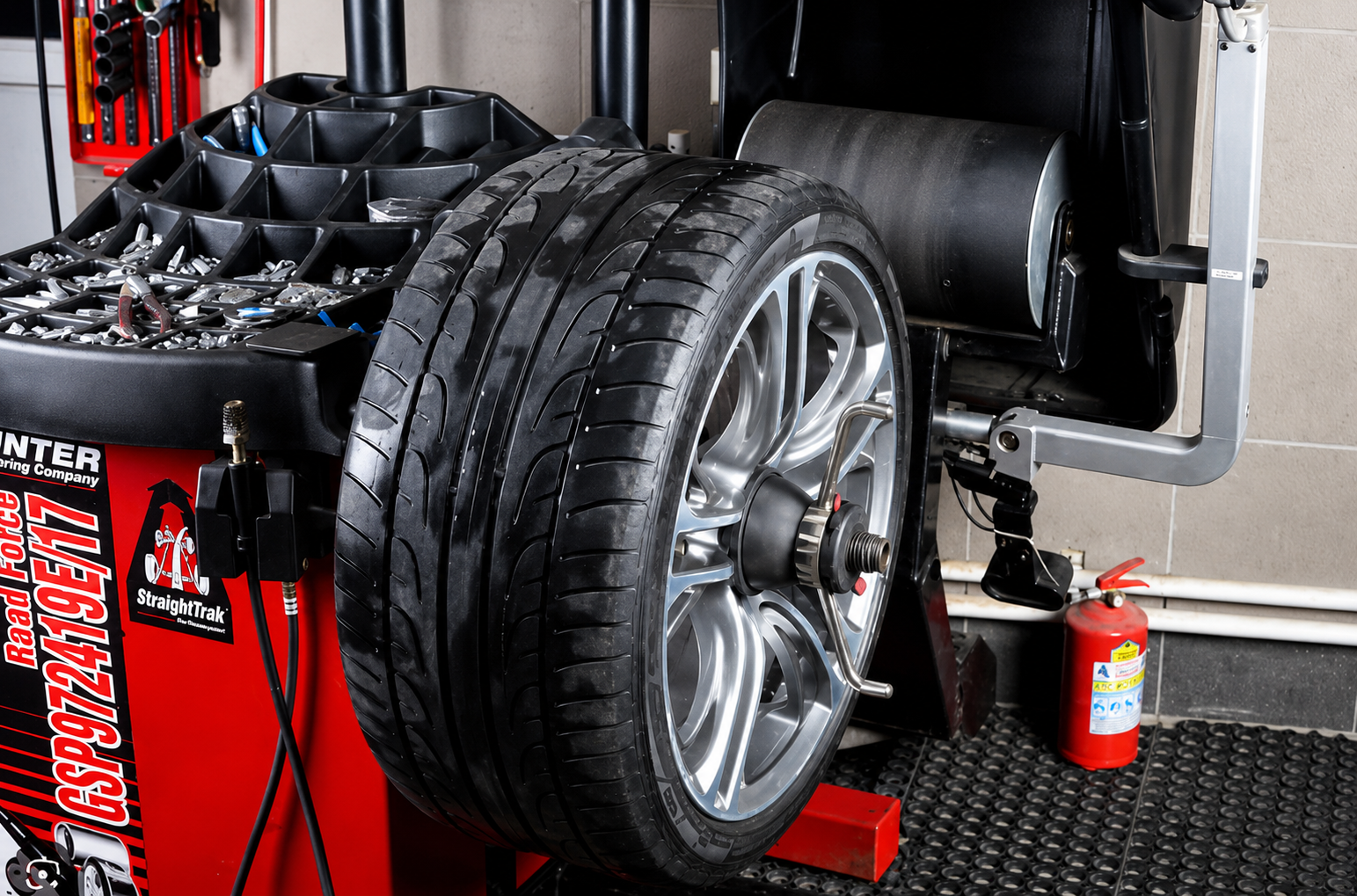
Mounted on our balancer, the assembly spins while the machine reads where the heavy spot sits and how far out of tolerance it runs. That reading drives every decision that follows.
Two roofers wearing hard hats work on a shingled roof, one kneeling and one leaning forward.
WEIGHT WORK
Rim Weight Correction

Small weights go onto the inside of the rim at the position the machine calls for. We use the lightest correction that brings the assembly into tolerance, then verify with a second spin.
House roof with steam or smoke rising from a damaged section near the gutter
VIBRATION TRACE
Vibration Diagnosis

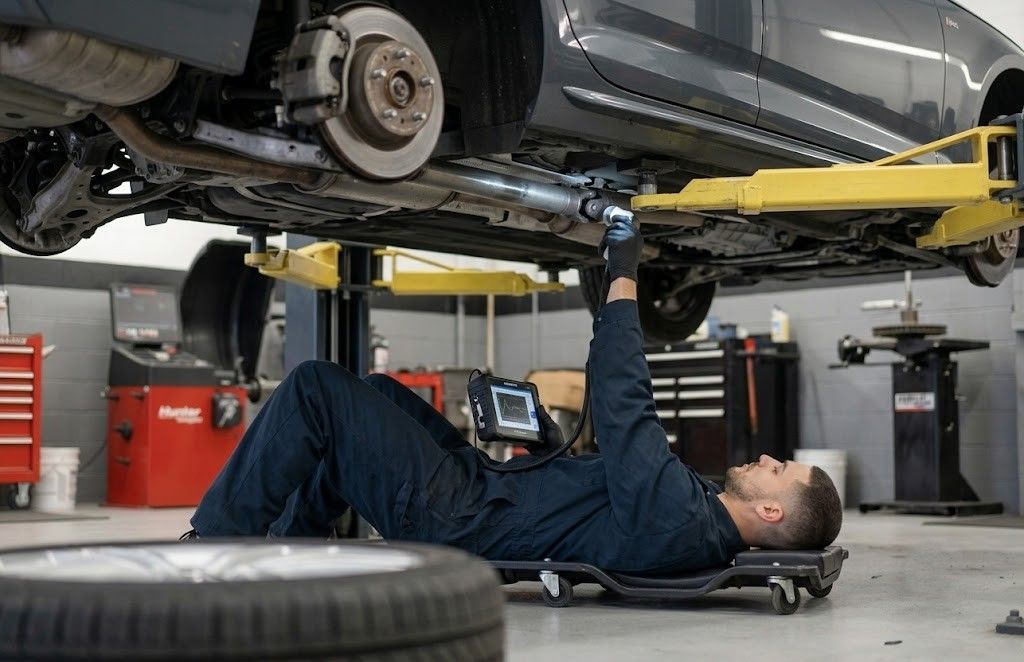
Not every shake is a tire. If the numbers come back clean, we look at bearings, driveshafts, brake rotors and suspension mounts rather than adding weight until the symptom is buried.
Two workers on a shingled roof, one kneeling with a hammer and one sitting nearby under a cloudy sky
NEW RUBBER
Balancing With New Tires

Fresh tires arrive unbalanced. Every new set we fit gets balanced on the machine before the vehicle leaves, because a brand new tire on an uncorrected rim vibrates exactly like a worn one.
Snow-covered rooftops under a clear blue sky
ROAD PROOF
Post-Balance Road Test

Our final check happens at speed on US 20, where the original complaint lived. A vehicle that felt rough at seventy should feel flat and quiet before we hand the keys back.
Black horizontal rounded bar on a white background

THE WORD ON OUR WORK

WHAT OUR CLIENTS SAY.
Drivers tend to arrive describing a buzz nobody else could find, and most leave surprised at how simple the fix turned out to be. The comment that comes back most often is about honesty: we say so when the wheels are fine and the real problem sits elsewhere.
Black horizontal line on a white background
Common Questions
FREQUENTLY ASKED QUESTIONS.
Questions about balancing come up at the counter more than almost anything else on the tire side. Here are the answers we give most weeks, written out so nothing gets lost.

How often should tires be balanced?

Around every 7,000 miles is the figure manufacturers generally publish, and it lines up neatly with a rotation visit. New tires, a hard pothole strike, or a returning vibration are reasons to check sooner than mileage suggests.


What does an unbalanced wheel feel like?

A steady vibration that starts around fifty and peaks at highway speed is the classic sign. Front imbalance shows up in the steering wheel, while rear imbalance is usually felt through the seat and floor instead.


Why are wheel weights placed on the inside of the rim?

The inner lip gives a clean, protected mounting surface and keeps the correction hidden behind the wheel face. Weights sit where the machine calculates, and the inside position holds them safely against road spray and curb contact.


Can balancing fix a vibration that only happens when braking?

No. Vibration under braking points at rotors rather than tires, and adding weight will not touch it. Luke's Alignment & Auto Repair measures rotor runout alongside wheel balance at our Chesterton, IN shop so the right fault gets fixed.


Do all four wheels need balancing at once?

Usually yes, because the assemblies wear together and a single corrected corner rarely settles the car. Checking all four takes little extra time once the wheels are already off, and it removes guessing about which corner caused the shake.


Does balancing help a car that is losing fuel economy?

It can. Imbalance makes a tire scrub across the road surface instead of rolling cleanly, and scrubbing costs mileage. Correcting it recovers what was being wasted, though alignment and tire pressure matter just as much.


Will worn tires balance properly?

Sometimes. A tire with cupping, a flat spot, or belt separation cannot be brought into tolerance because the damage itself is the imbalance. We measure first and tell you honestly when replacement is the only real answer.


Should I balance after hitting a pothole?

Yes, particularly after a hard strike on Indiana 49 in spring. Impact can throw a weight off the rim or bend the wheel outright. Luke's Alignment & Auto Repair checks balance and rim condition together in Chesterton, IN.


    Black horizontal line on a white background.
    HOW WE WORK
    FROM FIRST SHUDDER TO A QUIET WHEEL, HERE IS HOW.

    Step-01

    PIN DOWN WHEN IT SHAKES.
    Where the vibration appears in the speed range, whether it fades again, and where you feel it all narrow the search before a wheel comes off. We ask about recent tire work, curb strikes and pothole hits too.

    Step-02

    LIFT THE VEHICLE AND PULL THE WHEELS.
    Lifting the vehicle lets every assembly come off the hub, so nothing is judged through a wheel arch. Lug hardware, hub faces and rim edges get a look at the same time, since corrosion here throws readings off badly.

    Step-03

    SPIN EACH WHEEL ON THE BALANCER.
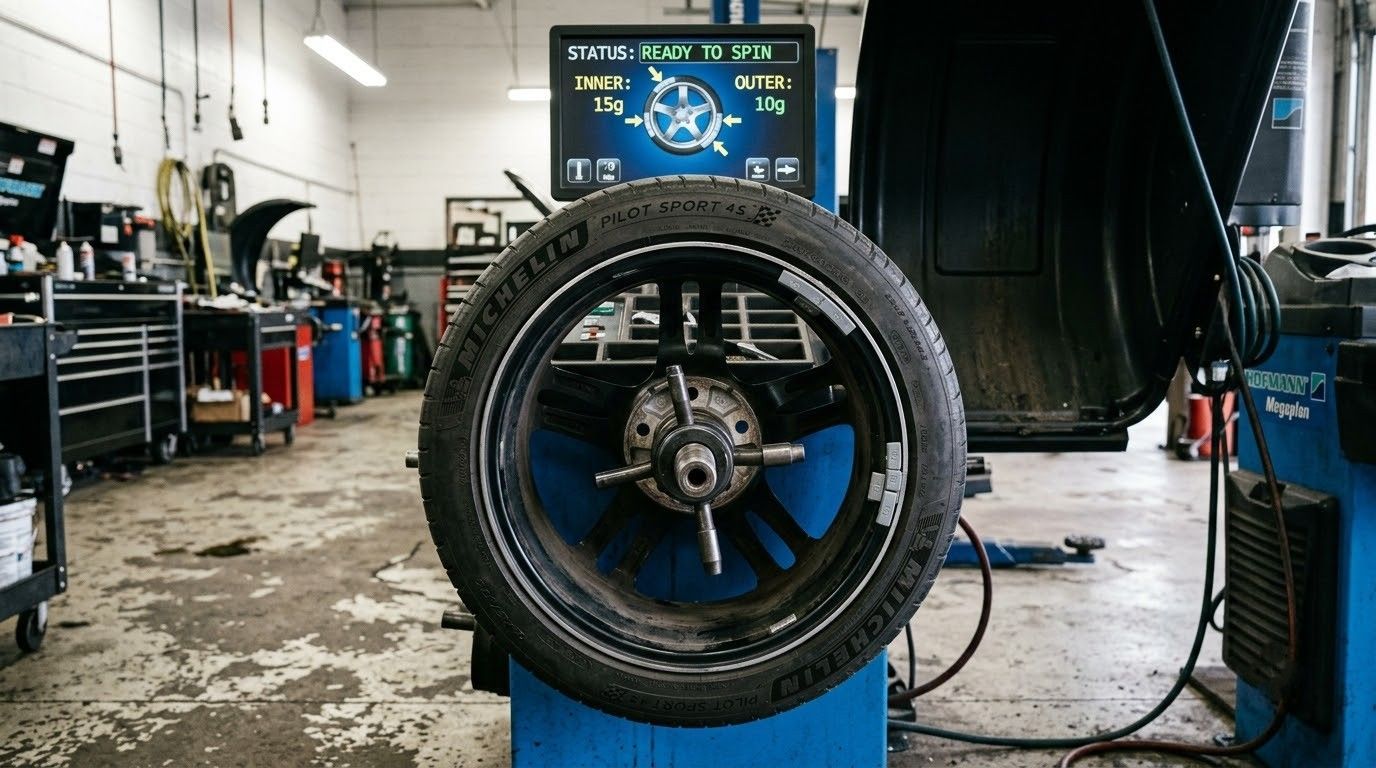
    Spinning at speed, the assembly lets the machine locate the heavy spot and report how many grams the rim is out. Inner and outer planes are measured separately, because a wheel can be off in either.

    Step-04

    FIT THE WEIGHTS THE READING CALLS FOR.
    Correction weights go on the inside of the rim at the calculated position. We clean the mounting surface first, because a weight fitted over brake dust and road film will not stay there through winter.

    Step-05

    SPIN AGAIN TO CONFIRM THE CORRECTION.
    We measure a second time to prove the weight did what the first reading predicted. If the number has not come down, the wheel goes back for a closer look rather than getting another weight stacked on.

    Step-06

    TORQUE THE WHEELS AND ROAD TEST.
    Lug nuts go back to the manufacturer's torque figure in the correct sequence, then the vehicle runs at highway speed. You get told what was found on each corner and what the readings were afterward.
    Thin black horizontal line on a white background
    GET YOUR FREE ESTIMATE
    A QUIET STEERING WHEEL STARTS WITH AN ESTIMATE, FREE.
    Imbalance rarely fixes itself, and the parts it wears out are far more expensive than the correction. Tell us the speed it appears at through our contact page, and we will book the wheels in and send a written estimate first.
    WHAT YOUR FREE ESTIMATE COVERS:

    ✓  Balance reading for all four wheels

    ✓  Rim and bead seat condition

    ✓  Weight correction and materials

    ✓  Tread and sidewall observations

    ✓  Road test at highway speed

    ✓  A written figure with no obligation