BRAKE SERVICE
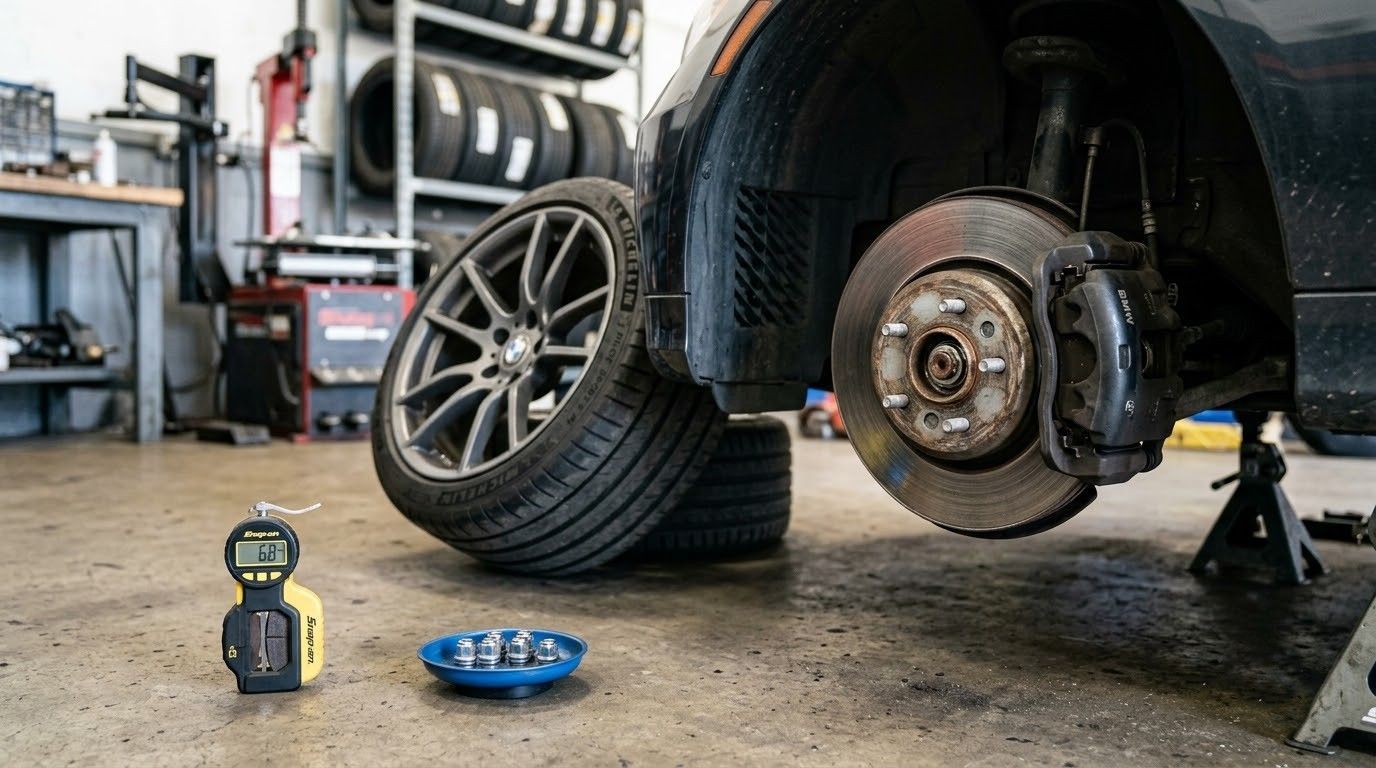
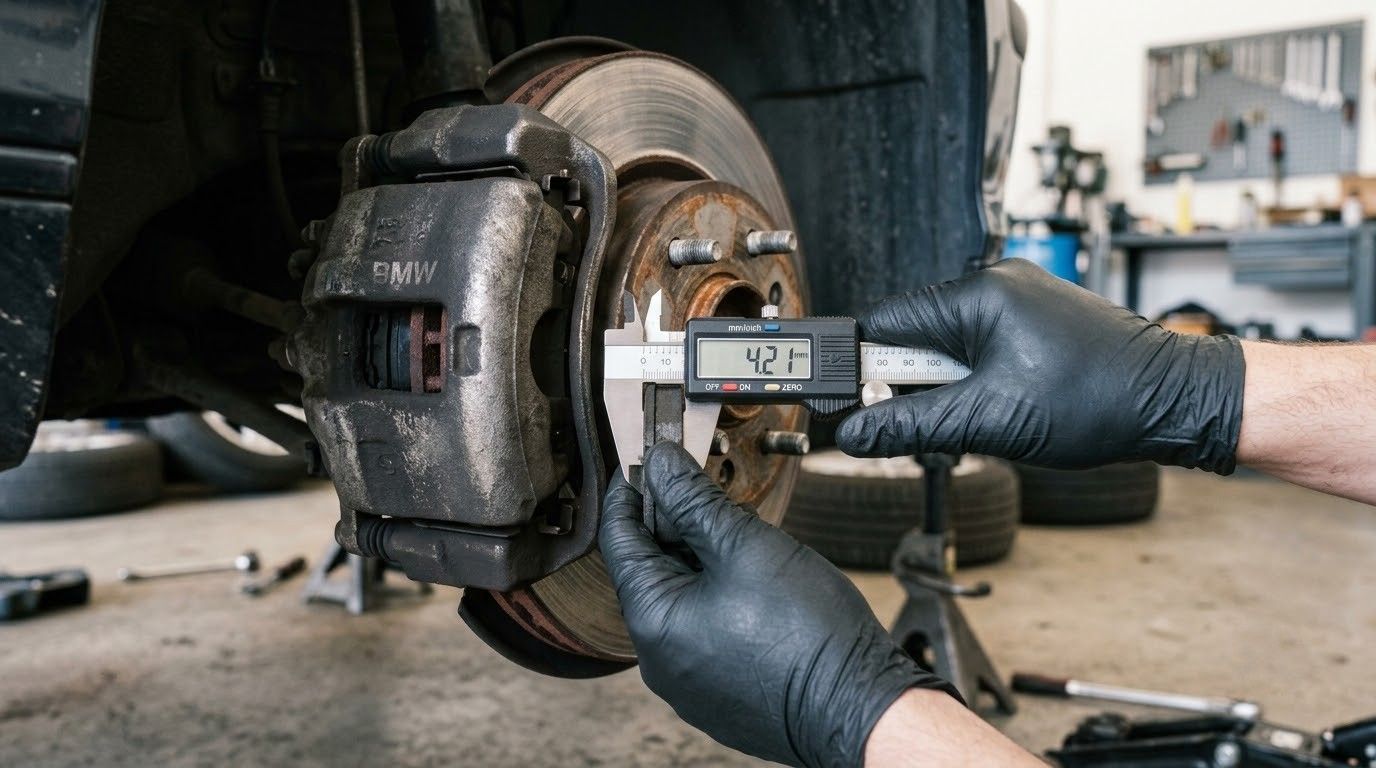
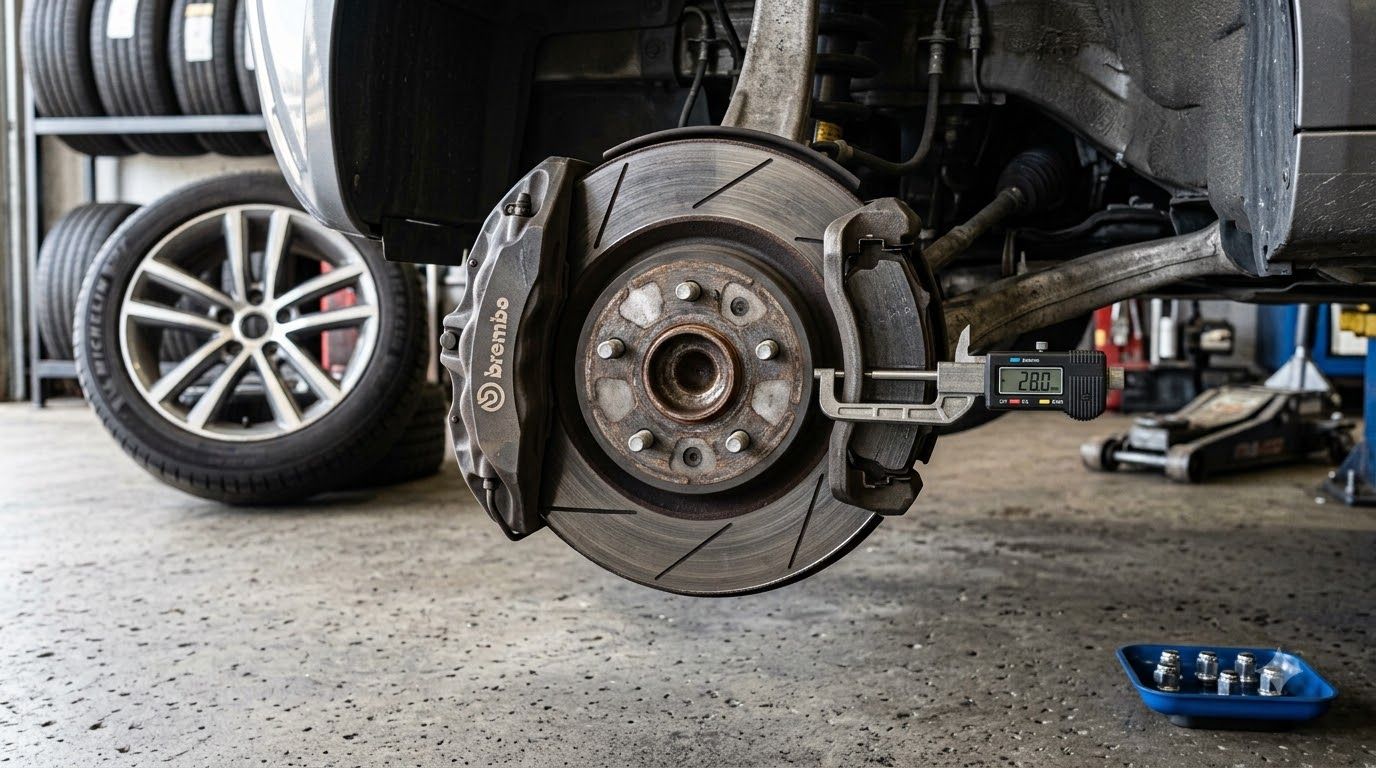
- Pad thickness measured and recorded
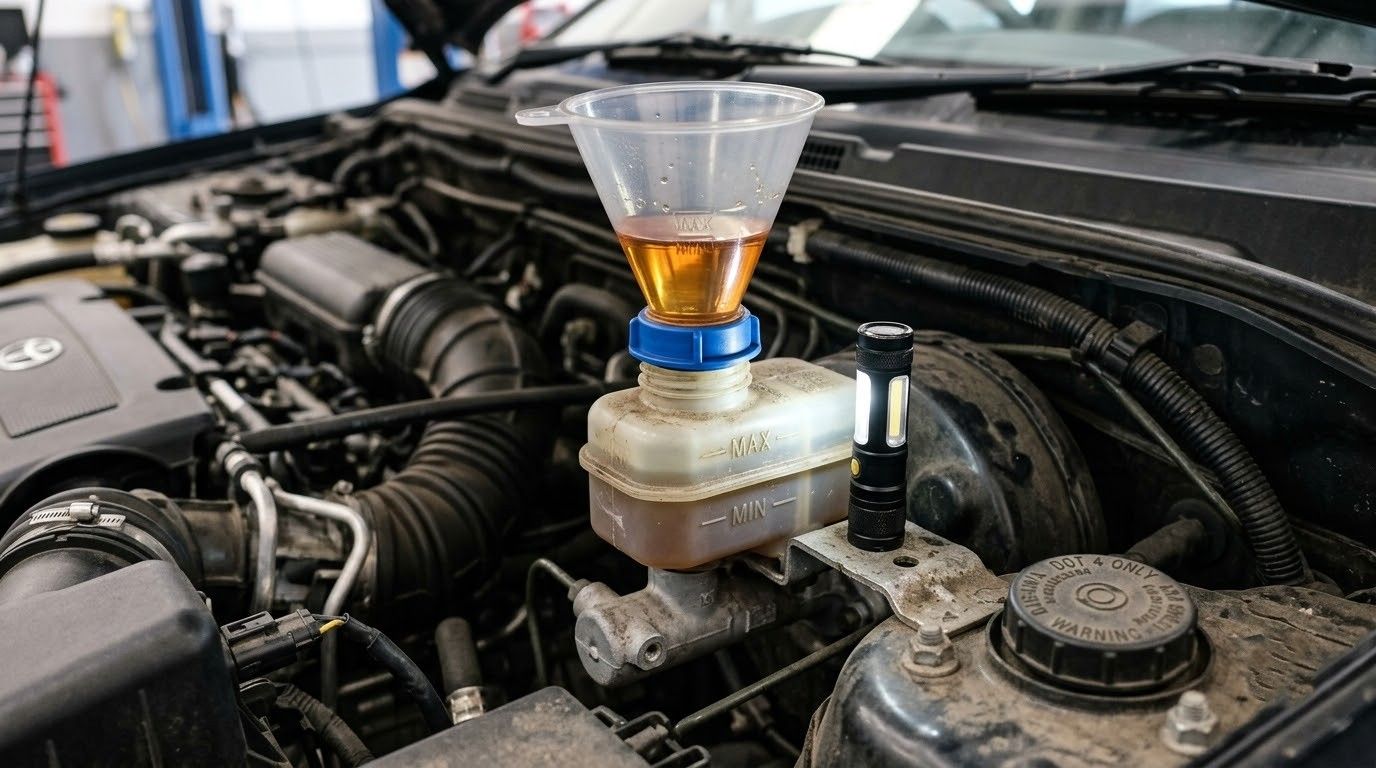
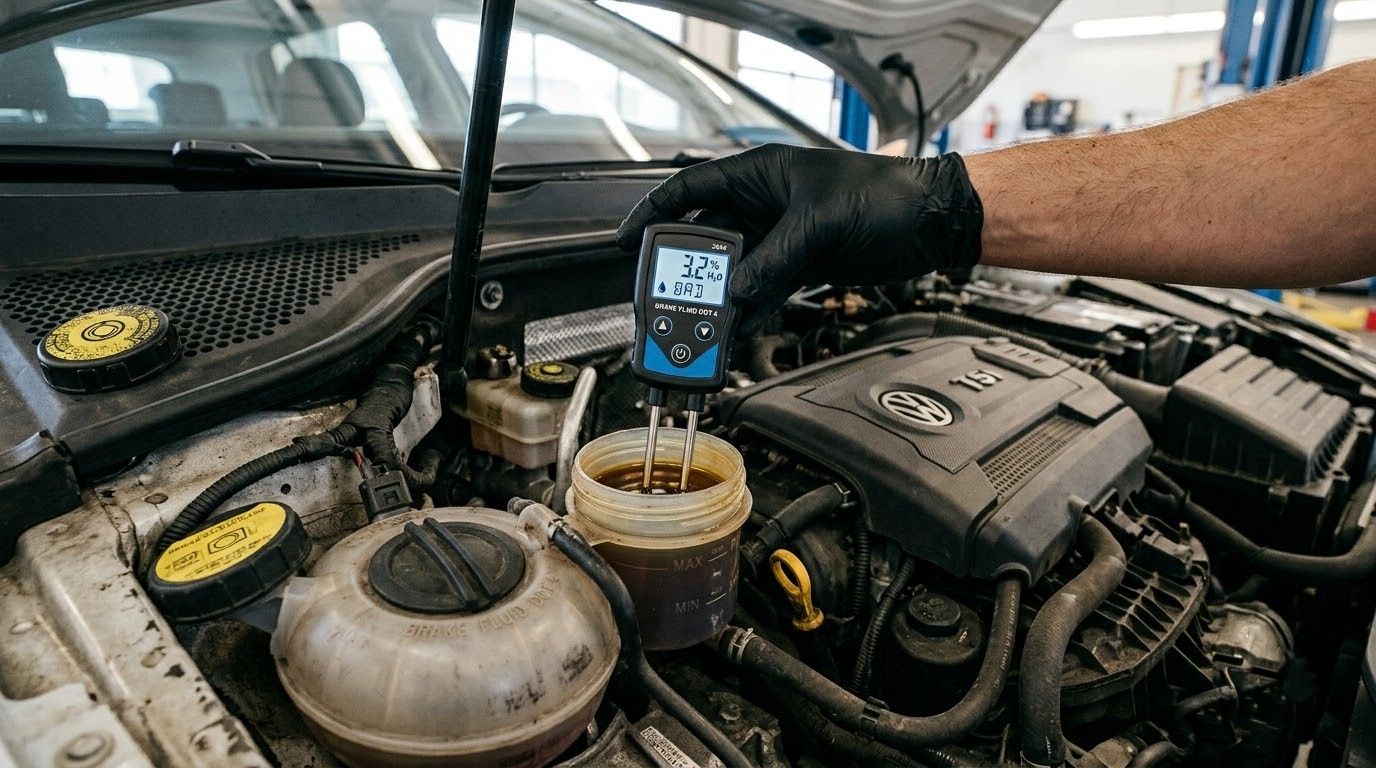
- Brake fluid tested for moisture
- Annual check-ups on a schedule
- Upfront quotes before any work
our services
THE WORD ON OUR WORK
How often should I have my brakes checked?
Schedule a brake check every 10,000 miles to keep wear from getting ahead of you. Between those visits, ask for a basic pad inspection at each oil change or routine check-up, since it takes only moments.
What does a brake fluid test actually measure?
It measures the moisture content in the fluid, usually as a percentage. Water lowers the boiling point, so fluid that reads high can vaporize under hard braking and leave the pedal soft when it matters.
Can brake pads and rotors be replaced separately?
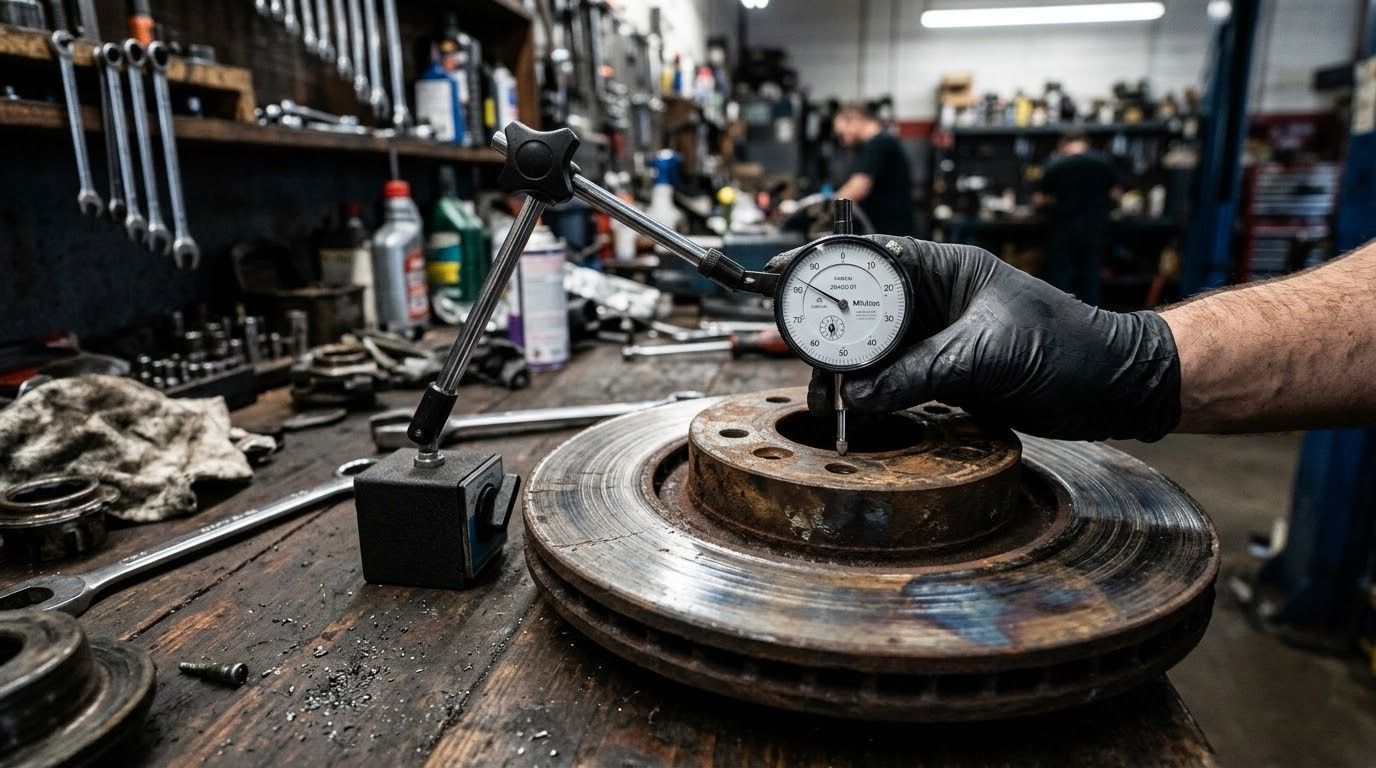
Often yes. If rotor thickness and surface condition still measure inside specification, new pads alone are appropriate. Rotors that are scored, warped, or below minimum thickness need replacing regardless of pad life.
What does a preventative brake maintenance program include?
Each program sets a checking rhythm around your mileage: pad measurement, rotor and drum condition, fluid testing, and hardware inspection at agreed intervals. Luke's Alignment & Auto Repair builds these programs for drivers throughout Chesterton, IN.
Why does brake service matter more in a salt belt winter?
Road brine attacks lines, caliper hardware, and drum components from the outside in. Regular inspection catches corrosion while a slide pin or a fitting can still be cleaned or replaced cheaply, well before a line fails.
Does a brake inspection require removing the wheels?
Yes, for anything conclusive. Pad thickness, rotor surface, caliper movement, and hose condition cannot be judged accurately through a wheel opening, so each corner comes off during a full inspection and goes back torqued to spec.
What is checked during an annual brake check-up?
Friction surfaces, the fluid, the lines, the hardware, and the parking brake all get reviewed against factory figures, then written up. Luke's Alignment & Auto Repair runs these annual check-ups at our Chesterton, IN shop.
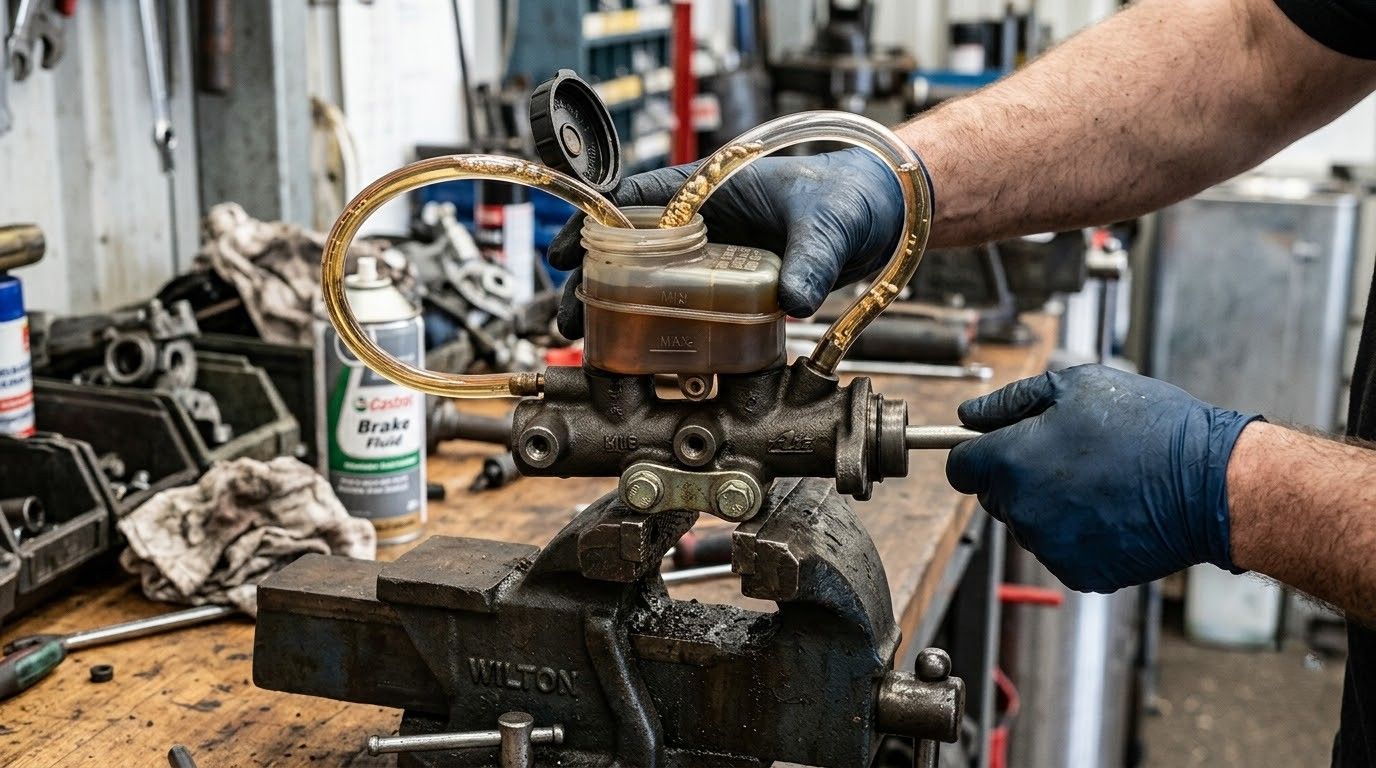
What is bleeding the brake lines for?
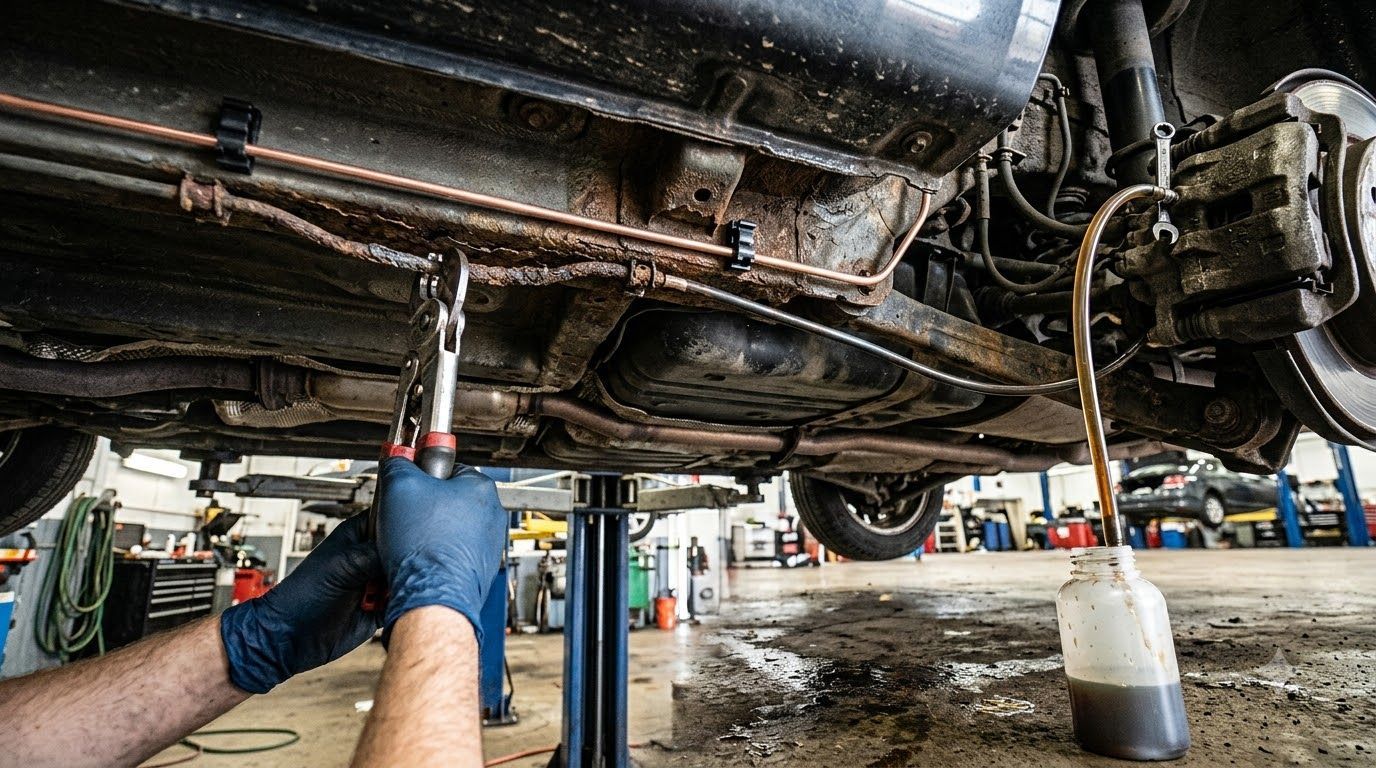
Bleeding pushes trapped air out of the hydraulic system. Air compresses where fluid does not, so even a small pocket makes the pedal feel spongy and lengthens the travel before the pads actually clamp.
Step-01
Talk Through What You Notice
Step-02
Run the Computerized Diagnostic
Step-03
Pull Each Wheel and Measure
Step-04
Test the Fluid and Lines
Step-05
Quote Only What Measured Out
Step-06
Set the Next Check Date
✓ Pad thickness at all four corners
✓ Rotor and drum condition measured
✓ Brake fluid moisture reading
✓ Line, hose, and hardware check
✓ Computerized system breakdown
✓ Written quote before any work