
Short black horizontal line on a white background

AUTO SERVICE

Porter County vehicles come due for an emissions test every second year, which is the one maintenance date the state actually puts on a driver's calendar. Everything else runs on mileage. Luke's Alignment & Auto Repair provides auto service in Chesterton, IN covering inspections, maintenance, engine repairs, tire changes, brake and wheel repairs, and transmission work. This page sets out which systems we check, on what rhythm, and how our specialists cover the whole vehicle without overcharging for labor.
Two workers in hard hats crouch on a rooftop, working on the roof structure under a cloudy sky.
Person carrying wooden planks on a rooftop under a blue sky
MILEAGE SHOULD DECIDE THE WORK, NOT GUESSWORK.
Every system on a vehicle wears at its own pace. Oil runs out of protection between 3,000 and 5,000 miles, tires want rotating between 5,000 and 7,000, alignment deserves checking around 6,000 or once a year, and brakes benefit from a look every 10,000. Servicing to those numbers costs far less than waiting for a failure to announce itself. Our specialists are trained to inspect every system in the vehicle, and our technicians are certified and licensed across a wide range of specialties. That means one visit can cover several intervals at once.
  • Inspections and scheduled maintenance
  • Engine, brake, wheel, and transmission work
  • Certified and licensed across specialties
  • Labor priced without padding
Black horizontal line on a white background.
AUTO SERVICE
WHAT WE SERVICE, SYSTEM BY SYSTEM.
Servicing a car properly means walking through it in order rather than reacting to whatever is loudest. Engine and fluids, brakes and hydraulics, tires and wheel geometry, steering and suspension, transmission, electrical, exhaust: each has its own interval and its own wear signature. We work through them methodically so nothing gets missed and nothing gets repeated. What passes inspection gets recorded as passing, and only what genuinely needs attention appears on the plan.
PORTER COUNTY MILES AGE A VEHICLE FASTER.
Service intervals in an owner's manual assume conditions that Northwest Indiana rarely provides. Road brine sits under a car for months, freeze-thaw pavement hammers wheels and bearings, and short winter trips never let an engine reach full operating temperature. Vehicles running US 20, Indiana 49, and I-94 through a Duneland winter reach each service point sooner than the same model would in a milder climate.
SERVICE LISTS HERE RUN SHORTER THAN YOU EXPECT.
After 40 years, we have learned that a service list padded with unnecessary items costs a shop more than it earns. Drivers compare notes in a town this size. So the plan you get names what the inspection actually found, ranked by urgency, priced without inflated labor, and separated clearly from anything that can safely wait until the next visit. Which systems on your vehicle are overdue?
WHY CHOOSE US FOR AUTO SERVICE.
Black car on a car lift icon
Intervals Matched To You
Your mileage, your commute, and your driving conditions set the schedule rather than a generic sticker. Somebody covering 25,000 highway miles yearly needs a different rhythm than a short-trip winter driver.
Black car on a car lift or jack icon
Whole Vehicle Reviewed
Trained specialists check the engine, brakes, wheels, transmission, steering, and electrical systems together. Faults interact, and looking at one system alone hides the cause sitting quietly in another.
Black car on a lift or jack stand icon
Labor Charged Fairly
Nobody gets overcharged for labor or for services here. Hours quoted reflect the hours a job genuinely takes, and multiple items handled in one visit save you paying twice for the same teardown.
Black car icon on a car lift
Passing Items Recorded
Components in good condition get written down as good. That record gives you a baseline, so next visit we compare measurements instead of starting the assessment over from nothing.
Black car on a car lift or jack stand icon
Everything Under One Roof
Inspections, engine work, tires, brakes, wheels, and transmission service happen in the same bay. One visit, one team, and no shuttling a vehicle between shops to finish a routine schedule.
Black car icon on a car lift, symbolizing vehicle maintenance or inspection
Scheduling That Works
Bookings are arranged around your week, and combined services are grouped into a single appointment. Free estimates come first, so you decide the scope before the vehicle goes anywhere near a lift.
Black horizontal line on a white background

our services

OUR AUTO SERVICE WORK
Routine care splits into a handful of recurring jobs, each with its own interval. Below is what we service regularly, and what a vehicle needs from us between one appointment and the next.
Person carrying wooden planks on a rooftop under a blue sky
ON SCHEDULE
Scheduled Maintenance

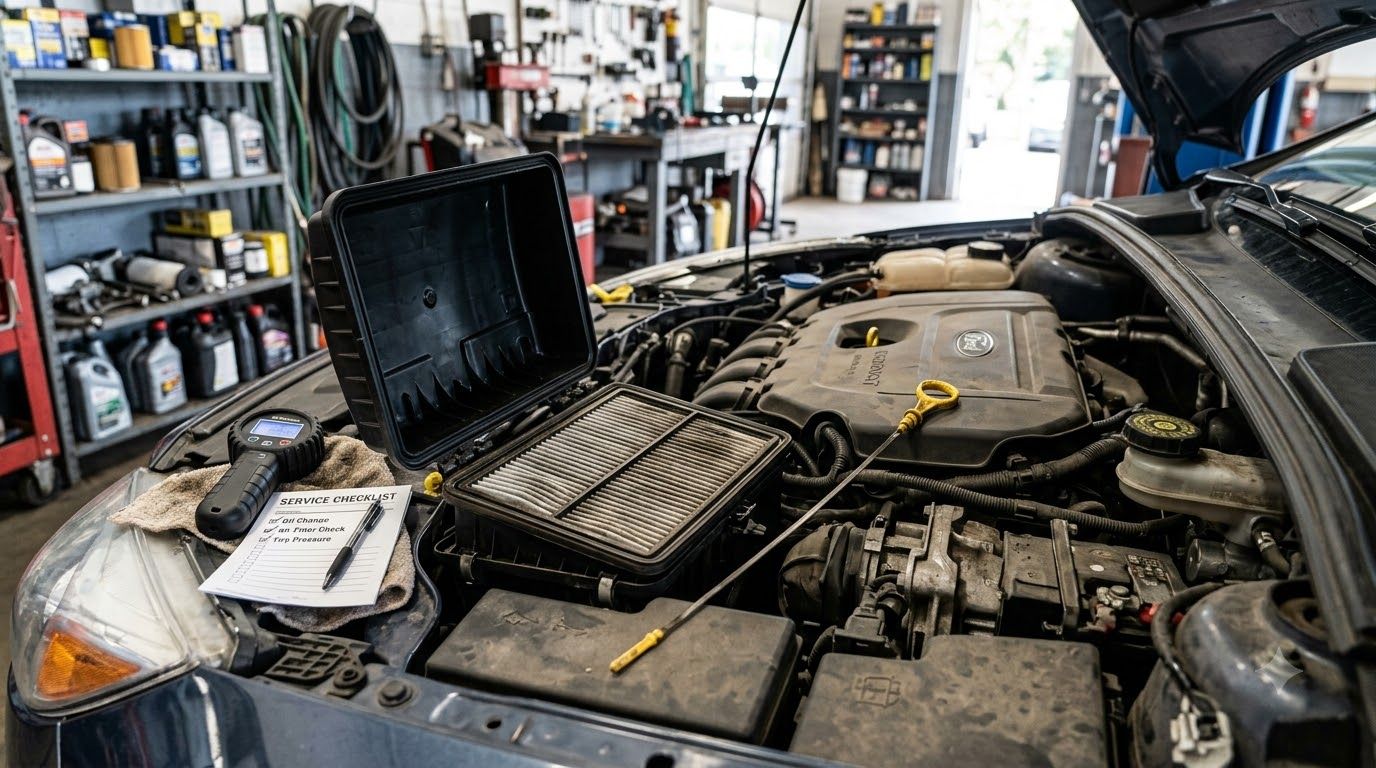
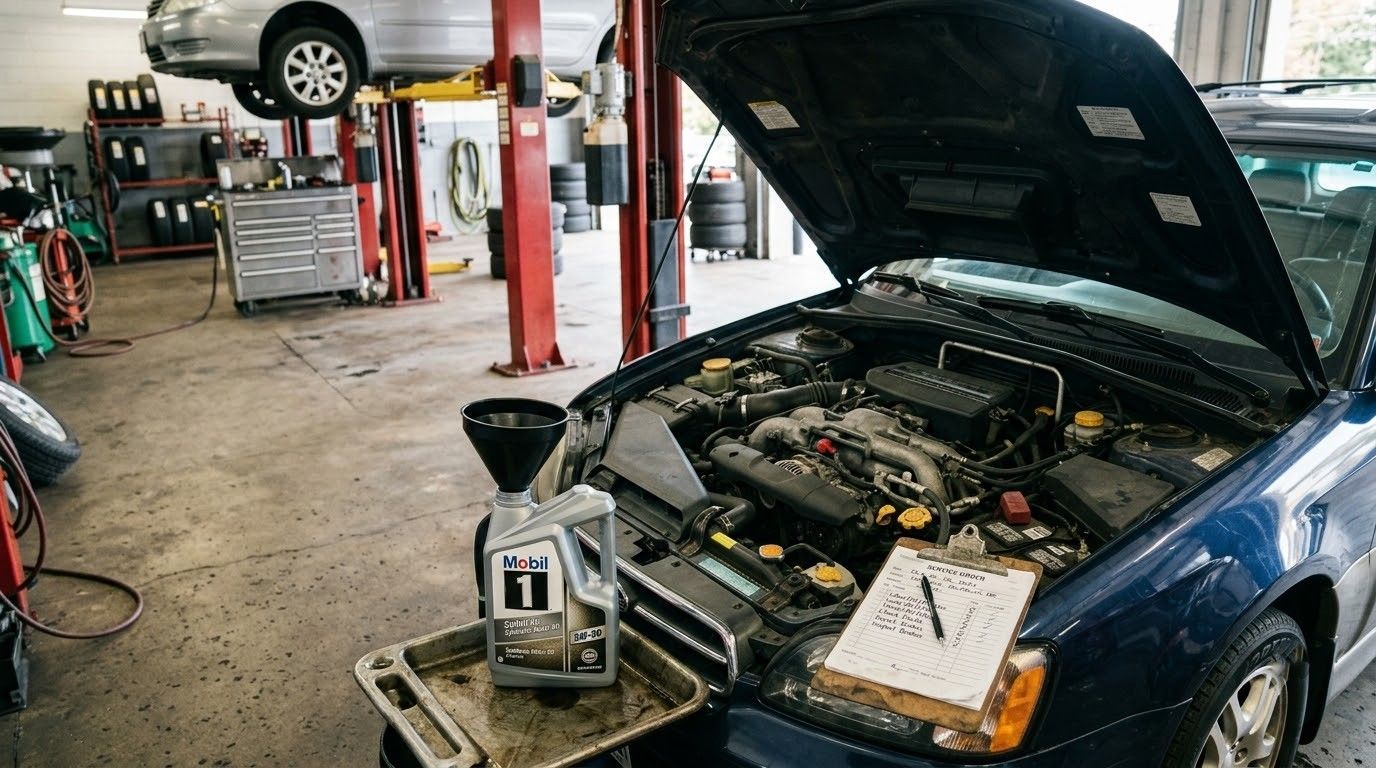
Fluids, filters, belts, and wear items get attended to on a rhythm suited to your mileage. Catching a component partway through its life costs a fraction of replacing it after it has taken something else with it.
Two workers in hard hats repairing a shingled roof under a cloudy sky.
FULL CHECK
Multi-System Inspections

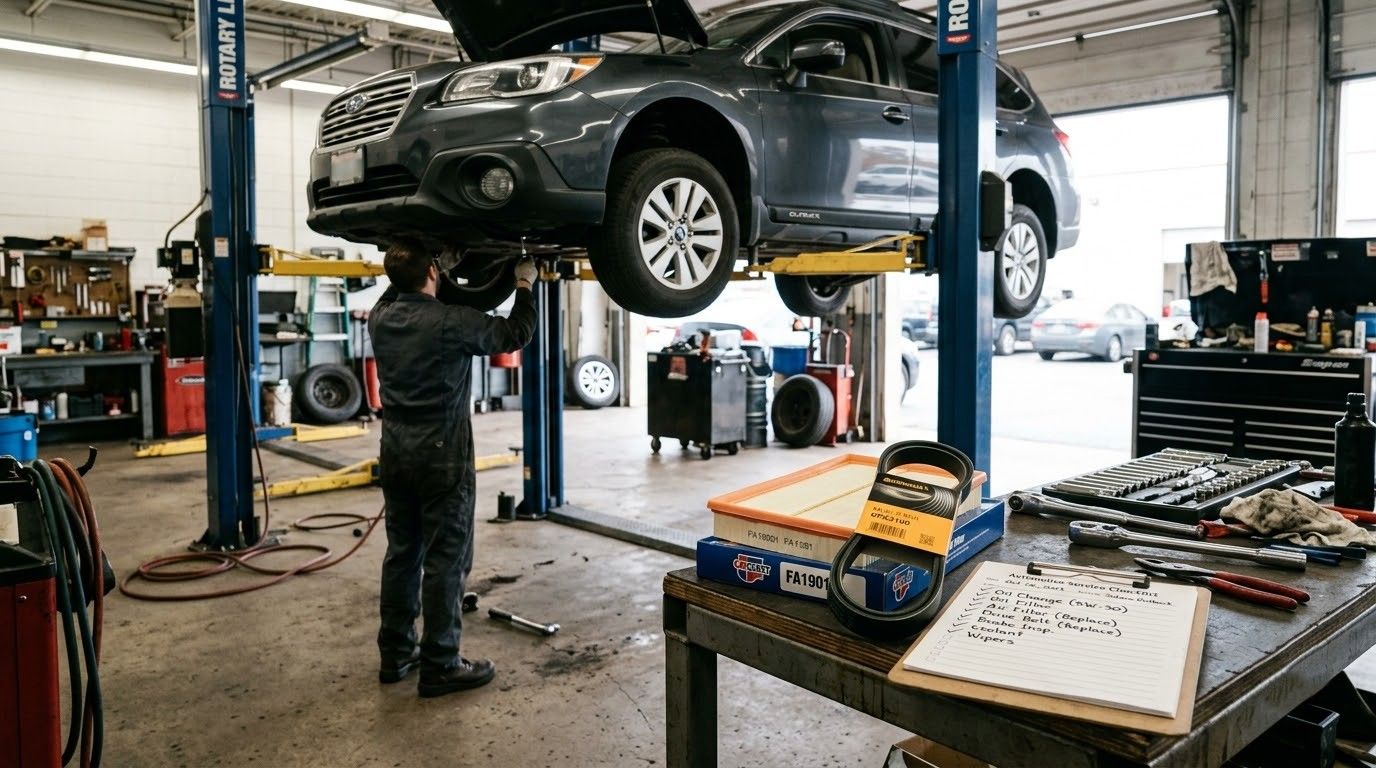
Engine, electrical, wheels and bearings, and transmission are assessed together during an inspection. Because Indiana mandates no periodic safety check, this voluntary review is the only thing standing between a wearing part and a breakdown.
Two roofers wearing hard hats work on a shingled roof, one kneeling and one leaning forward.
ENGINE SIDE
Engine Service and Repair

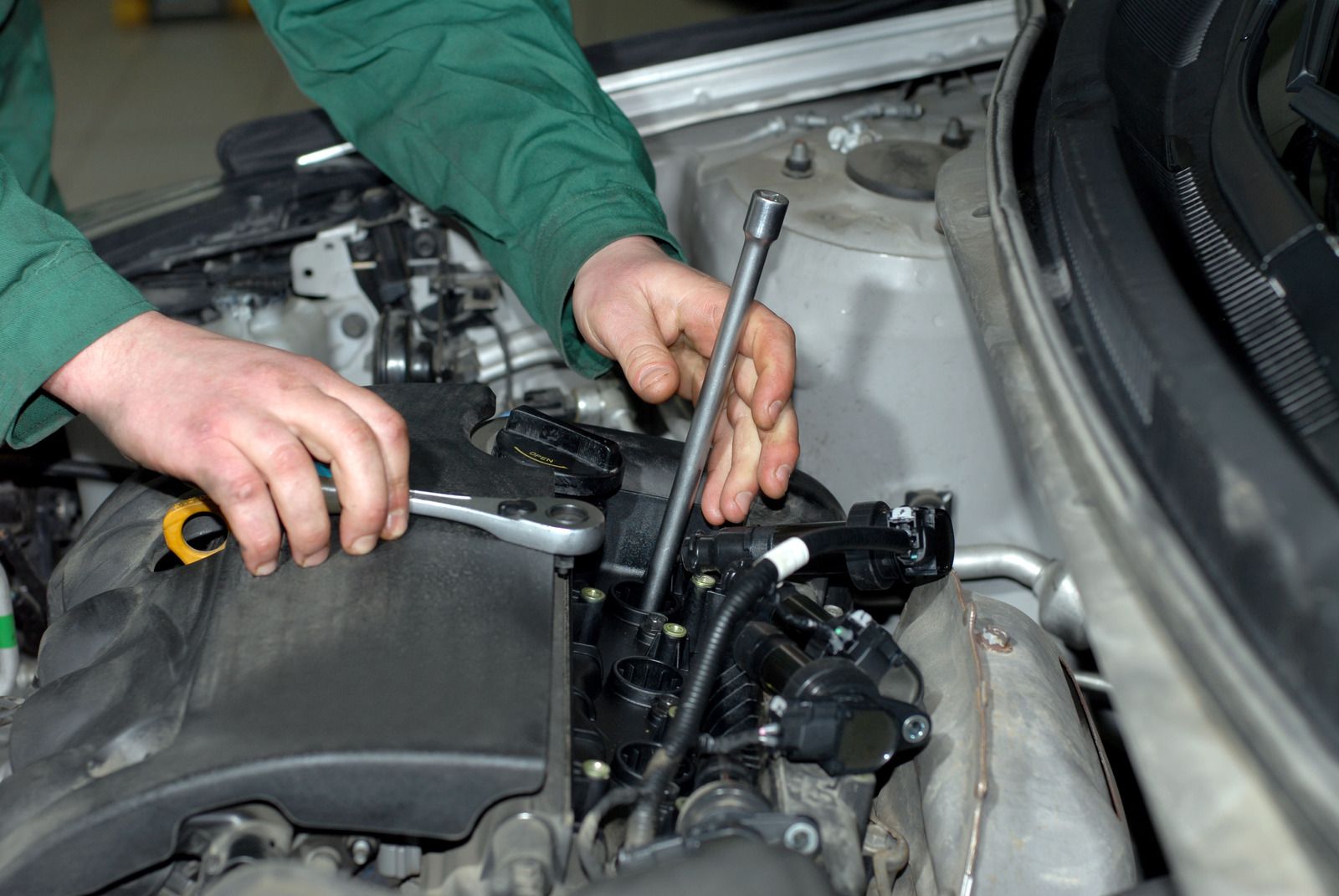
An engine service means fluids, filters, and sensors before it means teardown. If a fault does appear, we diagnose it properly, repair the cause, and retest the engine under load before the vehicle leaves.
House roof with steam or smoke rising from a damaged section near the gutter
TIRE SERVICE
Tire Changes and Services

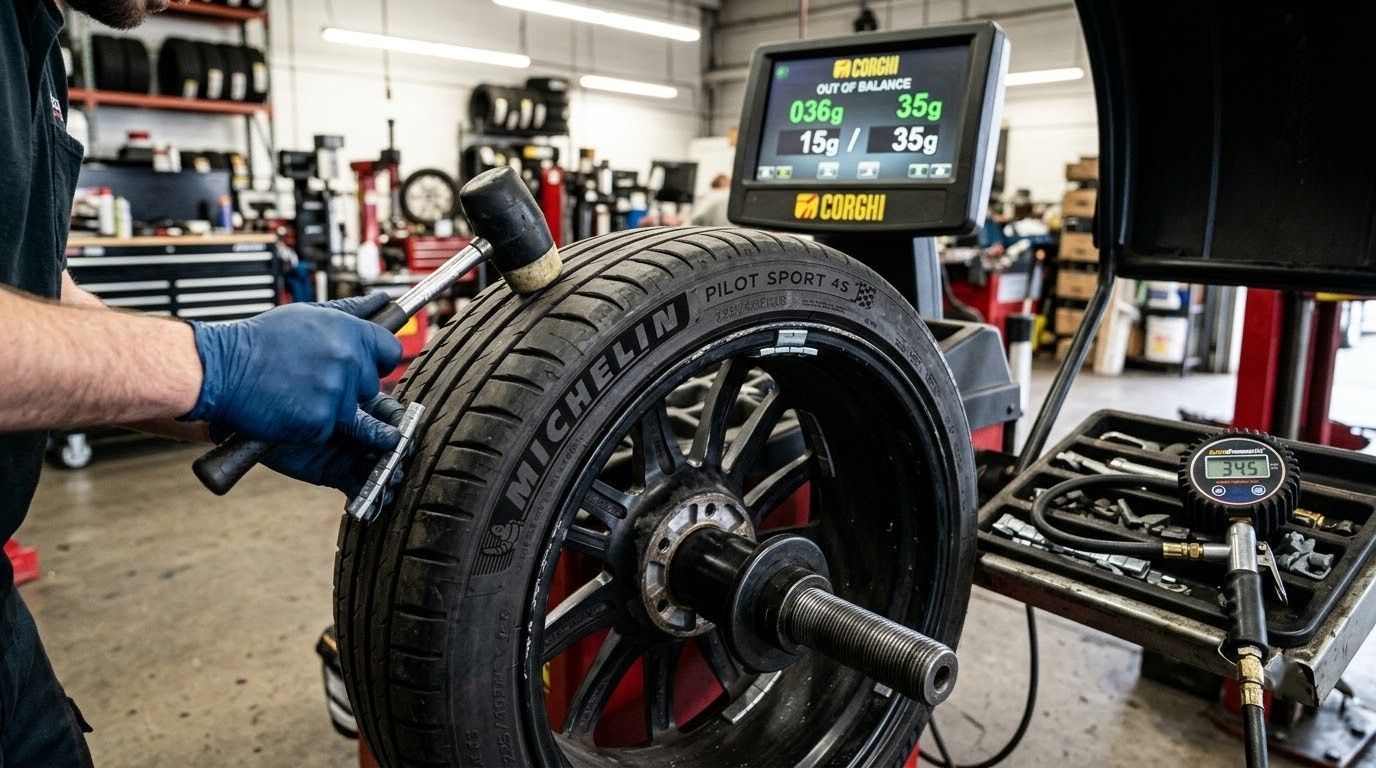
Rotation between 5,000 and 7,000 miles, balancing around 7,000, and replacement once tread nears 2/32 inch keep a set delivering its full mileage. Tires get fitted, balanced, and checked for correct pressure.
Two workers on a shingled roof, one kneeling with a hammer and one sitting nearby under a cloudy sky
STOPPING POWER
Brake and Wheel Repairs

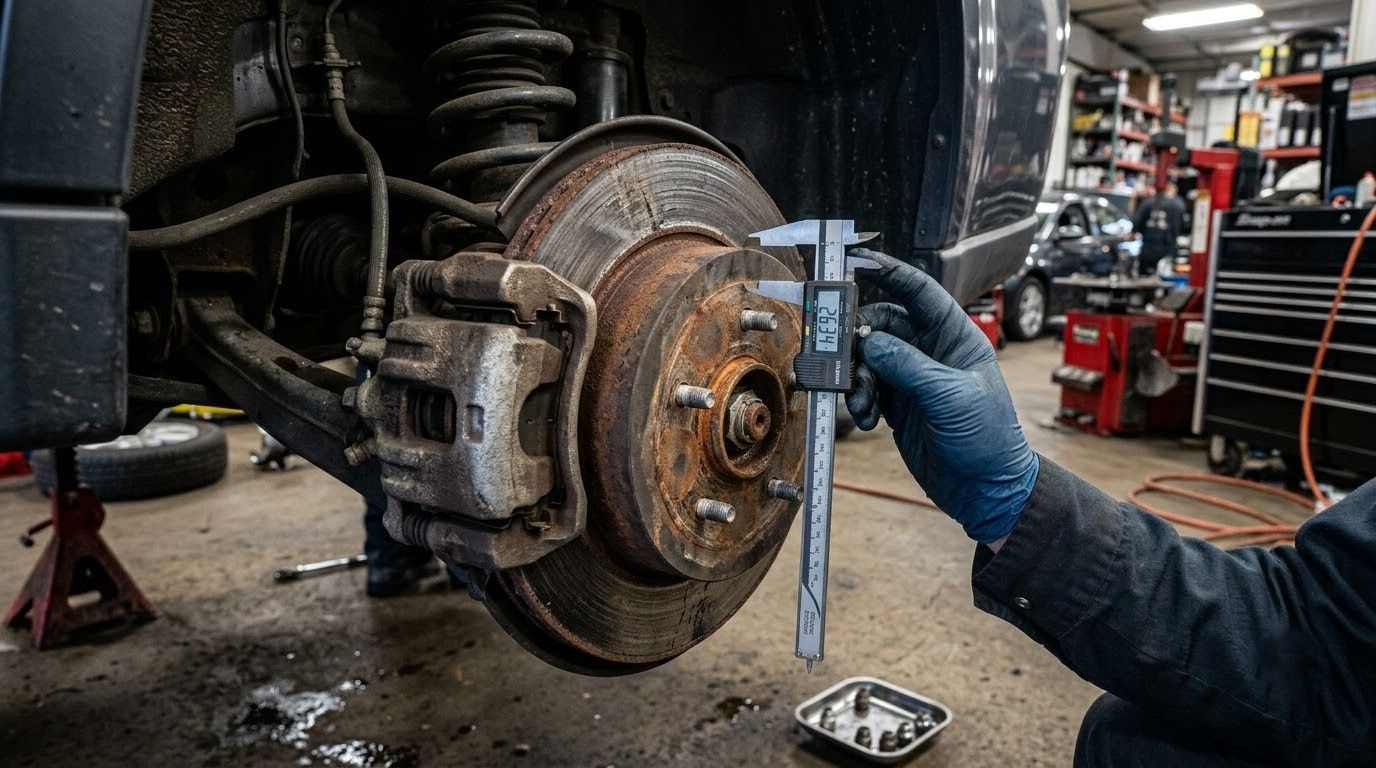
Pads, rotors, drums, fluid, wheel bearings, and hub condition are reviewed as a group. Rotors generally give 30,000 to 70,000 miles, and a check every 10,000 keeps a small job from turning into a large one.
Snow-covered rooftops under a clear blue sky
GEARBOX CARE
Transmission Repair

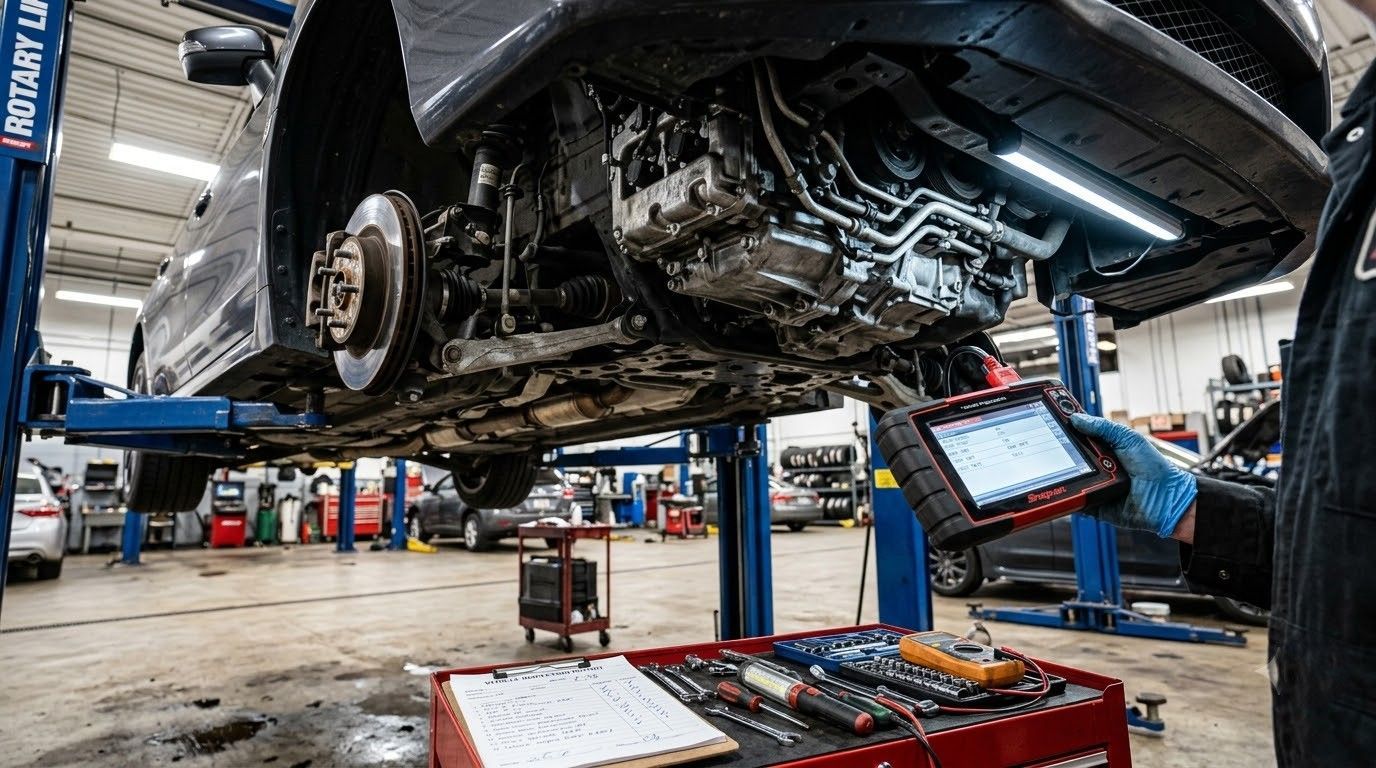
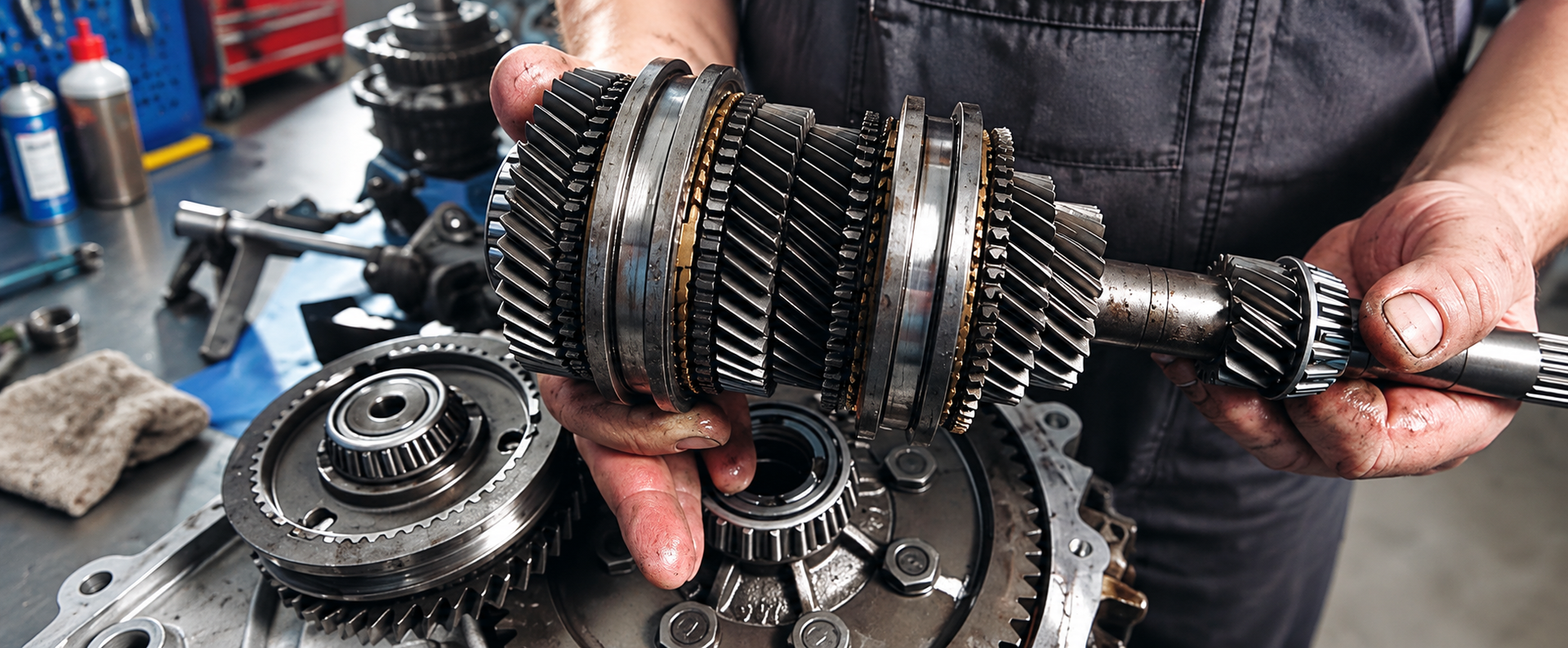
Draining old fluid, inspecting the pan, cleaning or replacing filters, resealing with fresh gaskets, and refilling keeps a gearbox healthy. Modern computerized transmissions punish neglect far more expensively than routine servicing ever costs.
Black horizontal rounded bar on a white background

THE WORD ON OUR WORK

WHAT OUR CLIENTS SAY.
Regular customers tell us the same thing in different words: their vehicles stopped surprising them. Booked services replaced roadside emergencies, the plan on each visit made sense against the mileage on the odometer, and the labor line on the invoice never once needed an argument.
Black horizontal line on a white background
Common Questions
FREQUENTLY ASKED QUESTIONS.
Below are the servicing questions that come up most often about intervals, systems, and what a visit should include. Our contact page reaches us directly if yours is not answered here.

How often should each system on my vehicle be serviced?

Intervals differ by system. Oil runs 3,000 to 5,000 miles or 90 days, tire rotation 5,000 to 7,000, balancing around 7,000, alignment roughly every 6,000 or yearly, and a brake check every 10,000 miles.


Does short-trip driving change my service intervals?

Considerably. Short winter trips never bring oil to full temperature, so moisture and fuel dilute it faster. Stop-start mileage also loads brakes harder. Both push servicing toward the shorter end of every published interval.


What gets checked during a full vehicle service?

Core coverage is engine, electrical systems, wheels and bearings, and transmission, alongside fluids, brakes, tires, and steering. You receive the findings in writing, including the components that measured healthy, not only the ones needing work.


How often should tires be rotated and balanced?

Tires want rotating between 5,000 and 7,000 miles to even out tread wear, and manufacturers typically recommend balancing around every 7,000. Both are quick, inexpensive, and add serious mileage to a set of tires.


When does transmission fluid need servicing?

Condition matters more than a fixed figure. Cloudy or burnt-smelling fluid, delayed engagement, or shifting that has grown harsh all indicate a service is due. Luke's Alignment & Auto Repair inspects the pan and filter in Chesterton, IN.


Can several services be combined into one visit?

That is usually the cheaper approach. Rotation, alignment, an oil change, and a brake inspection share the same lift time, so grouping them cuts labor and puts your vehicle back on the road sooner.


Is a wheel alignment part of routine servicing?

It should be. Camber, caster, and toe deserve checking roughly every 6,000 miles or annually, and always after new tires or a hard pothole strike. Alignment protects tread more cheaply than any other single service.


What is the difference between a service and a repair?

A service is planned work carried out on an interval to prevent failure. A repair fixes something that has already failed. Luke's Alignment & Auto Repair in Chesterton, IN handles both, though servicing keeps repairs rarer.


    Black horizontal line on a white background.
    HOW WE WORK
    HOW WE TURN A SERVICE INTO A SCHEDULE.

    Step-01

    START FROM MILEAGE AND HISTORY.
    Odometer reading, previous work, and how the vehicle is actually driven come first. A commuter running I-94 every day and a car used twice a week need genuinely different intervals, so we always begin there.

    Step-02

    WORK THROUGH EVERY SYSTEM.
    Specialists inspect engine, electrical, wheels and bearings, brakes, steering, suspension, and transmission in a fixed order. Doing it the same way every time means nothing gets skipped because something noisier happened to grab attention first.

    Step-03

    MEASURE AGAINST PUBLISHED INTERVALS.
    Findings are compared to manufacturer figures and to the numbers that matter locally, such as 2/32 inch of tread depth or a rotor nearing its published wear limit. Measurements decide the recommendation, not impressions or guesses.

    Step-04

    AGREE THE PLAN TOGETHER.
    You get an objective service plan showing what is due now, what is approaching soon, and what measured fine today. Free estimates, honest labor hours, and no extra services slipped onto the list without your approval.

    Step-05

    CARRY OUT THE APPROVED WORK.
    Agreed items are completed in one visit wherever the lift time overlaps, using OEM or OEM-equivalent parts. Grouping the work this way keeps both your labor bill and your time off the road down.

    Step-06

    SET THE NEXT SERVICE POINT.
    Before the keys go back, you know which interval falls due next and roughly when your mileage will reach it. Servicing stops being reactive once the following appointment already has a number attached to it.
    Thin black horizontal line on a white background
    GET YOUR FREE ESTIMATE
    GET YOUR VEHICLE'S SERVICE PLAN PRICED, FREE.
    Planned upkeep is the cheapest ownership decision available, and it starts with knowing where each system currently stands. Send your mileage and any symptoms through our contact page or quote form, and we will build the plan around them.
    WHAT YOUR SERVICE PLAN COVERS:

    ✓  Every major system inspected and recorded

    ✓  Work ranked by what is due now

    ✓  Intervals matched to your actual mileage

    ✓  Labor hours quoted without padding

    ✓  OEM or OEM-equivalent replacement parts

    ✓  The next service point set before you leave