

SUSPENSION REPAIR
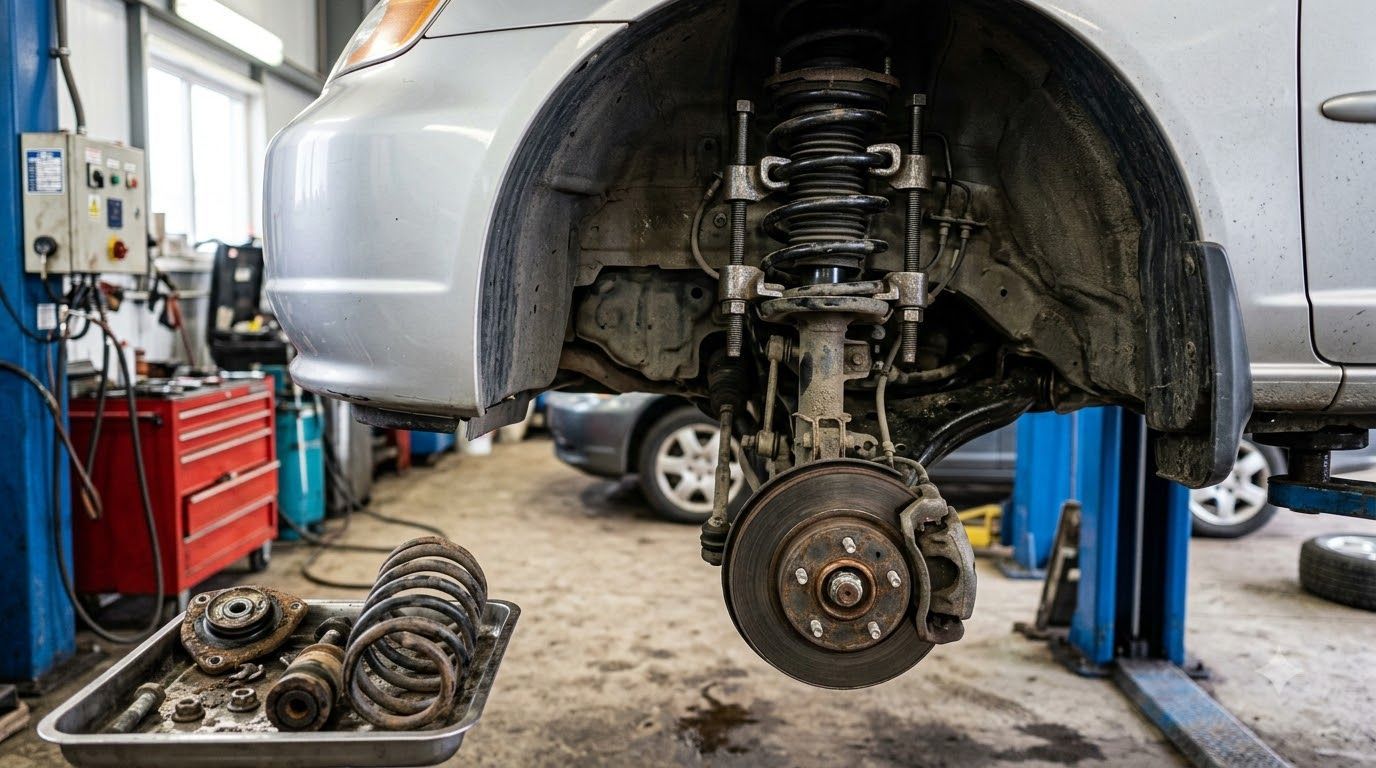
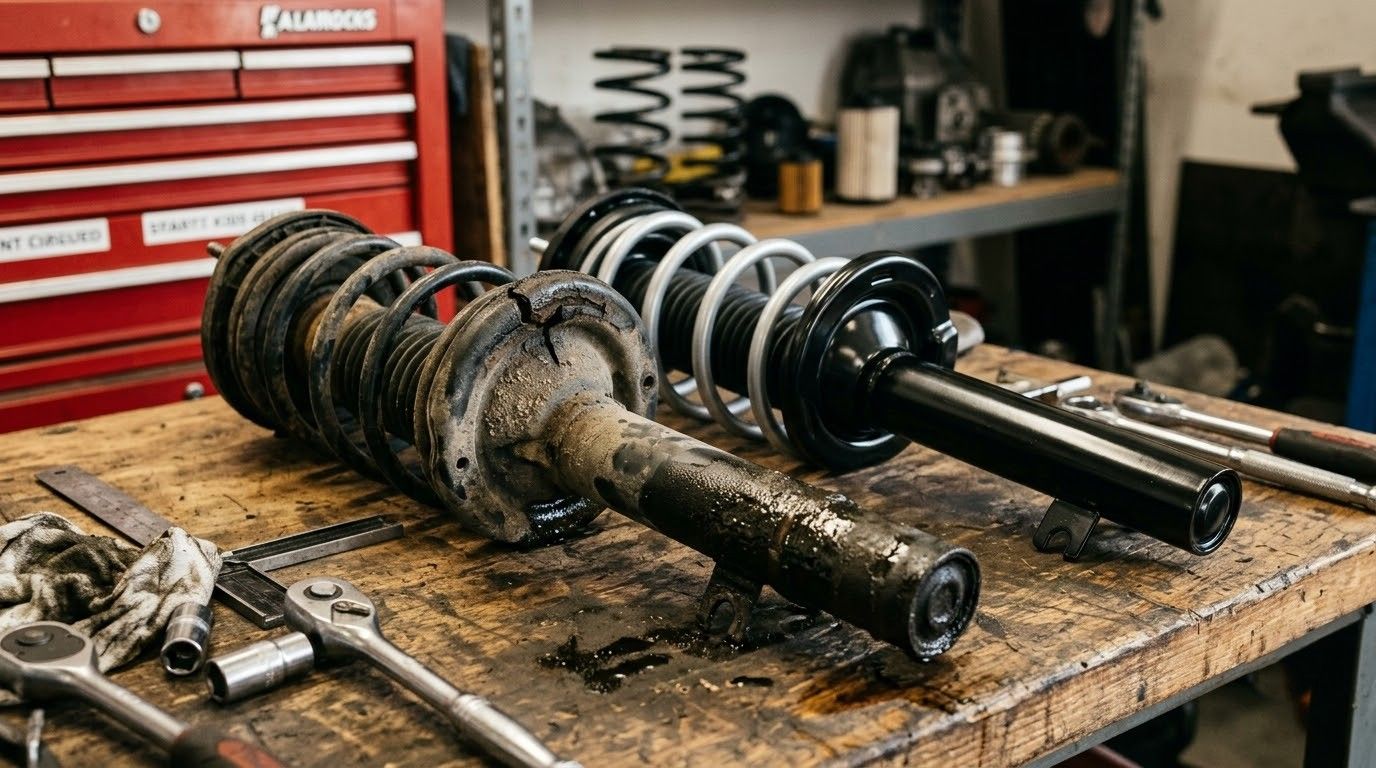
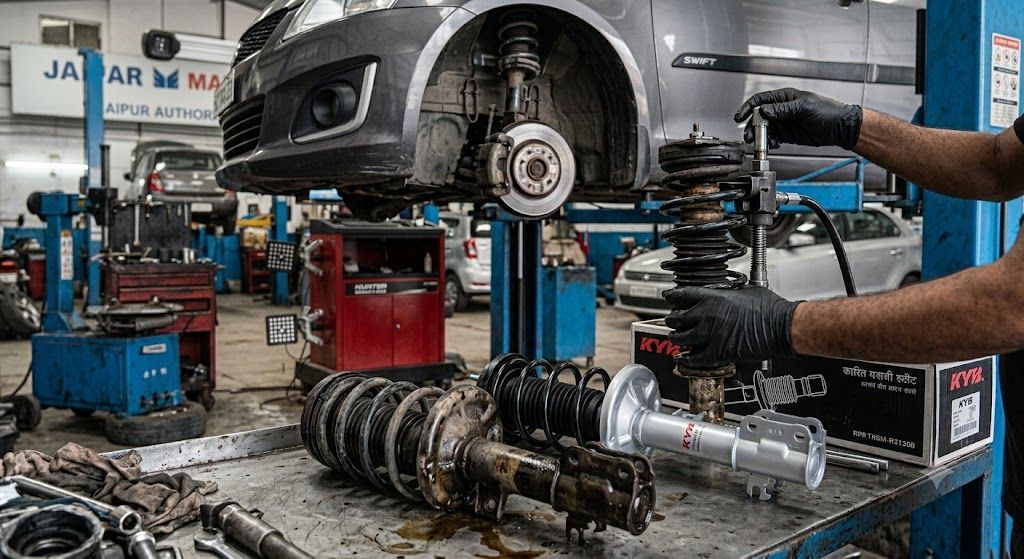
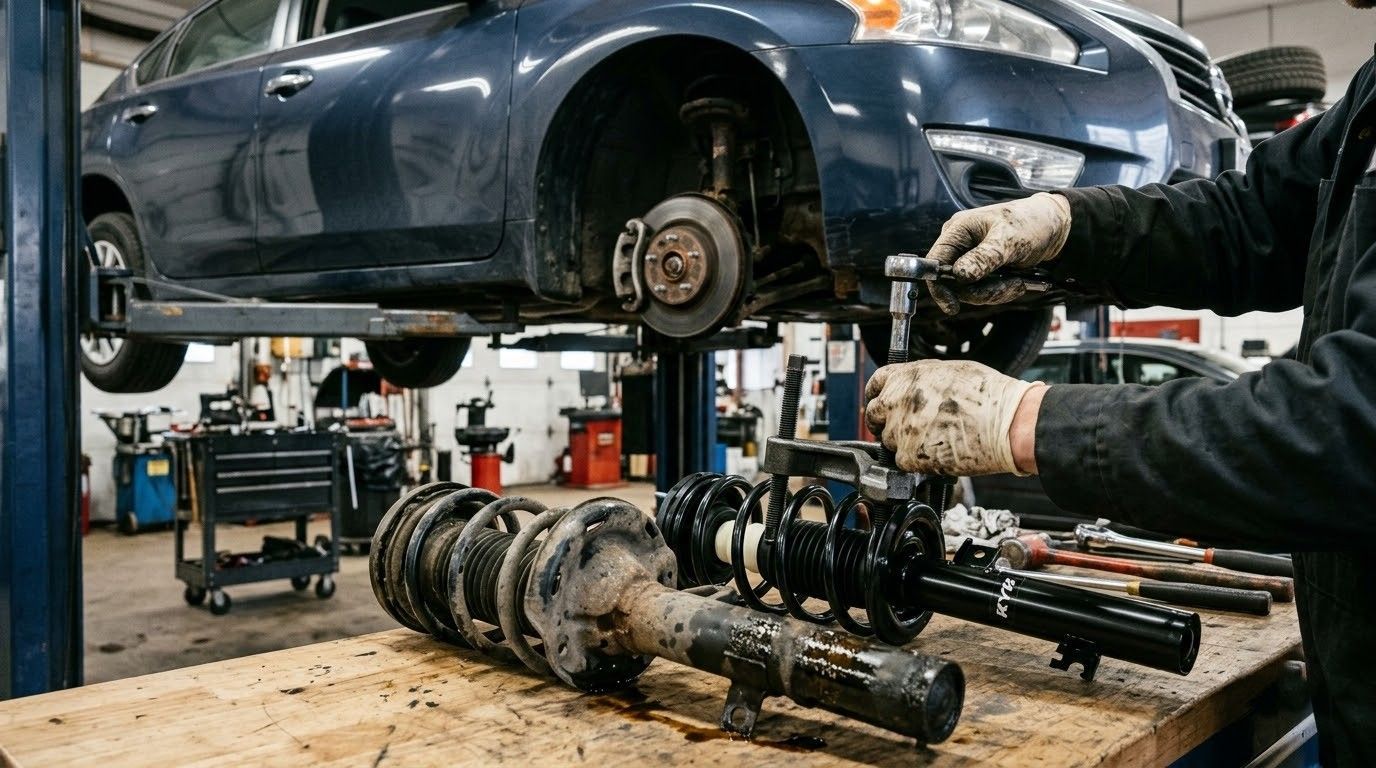
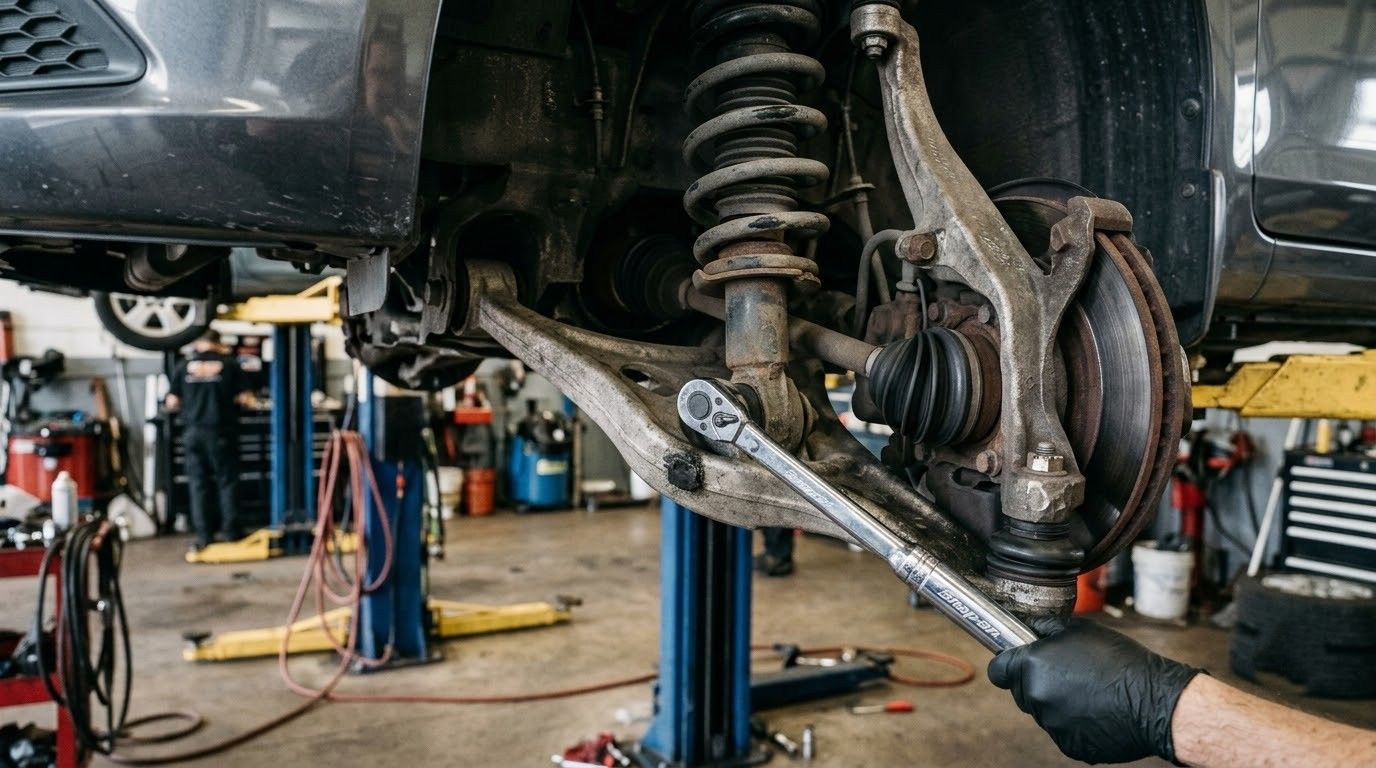
- Shocks, struts, springs, and bushings
- CV joints and wheel bearings inspected
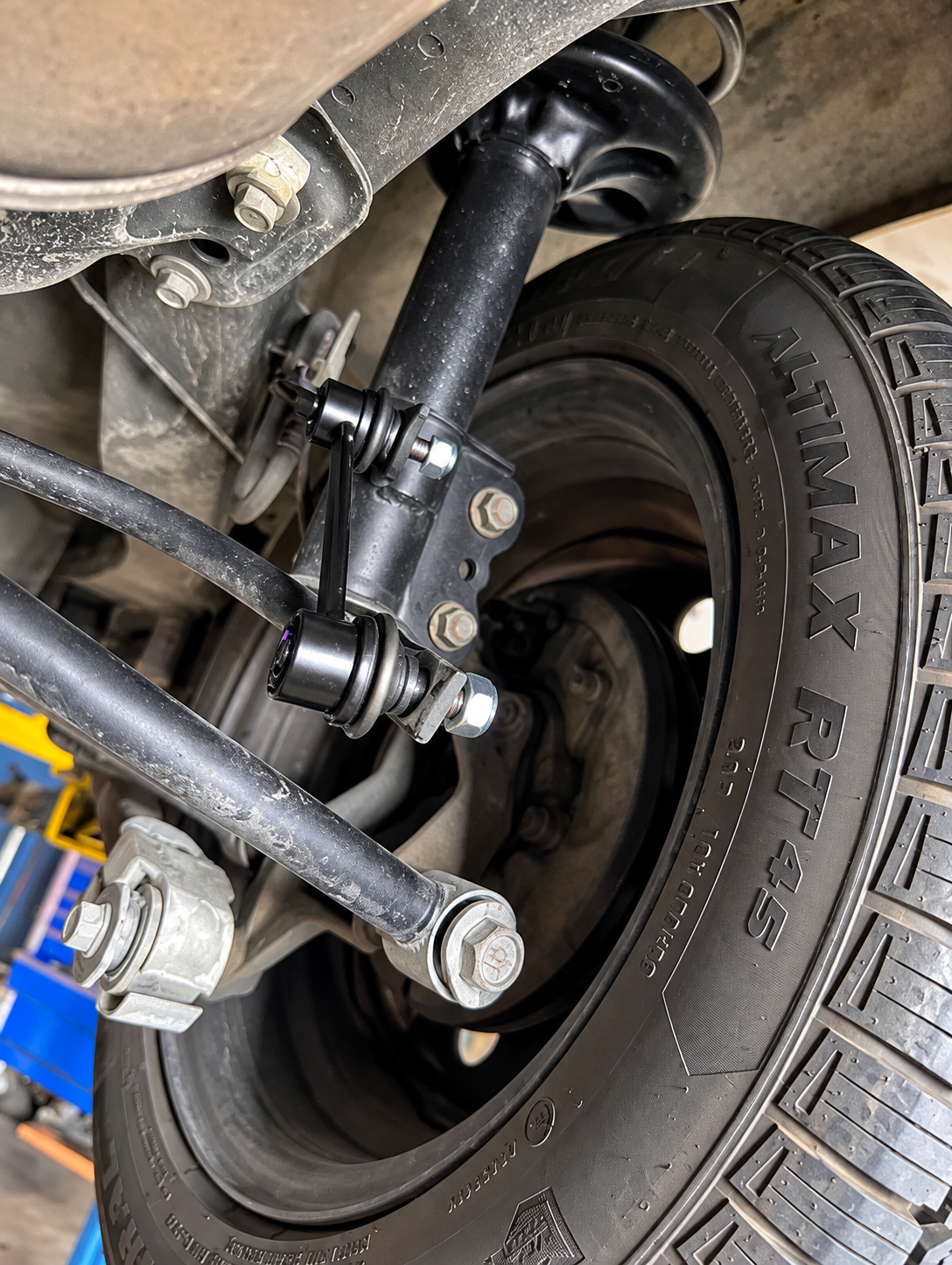
- Stabilizing bar and power steering
- Estimated cost and duration up front
our services
THE WORD ON OUR WORK
What are the first signs of worn shocks or struts?
Swaying or bouncing at low speed is usually first, followed by the nose diving under braking. A rough ride, shaking over bumps, or a vehicle that no longer sits level when parked all point the same direction.
How long do shocks and struts usually last?
Mileage varies with road conditions more than anything else. Vehicles living on broken pavement and salted winter roads wear dampers considerably faster than the same model driven on smooth highway, so we judge by condition rather than a fixed number.
Does bad suspension cause uneven tire wear?
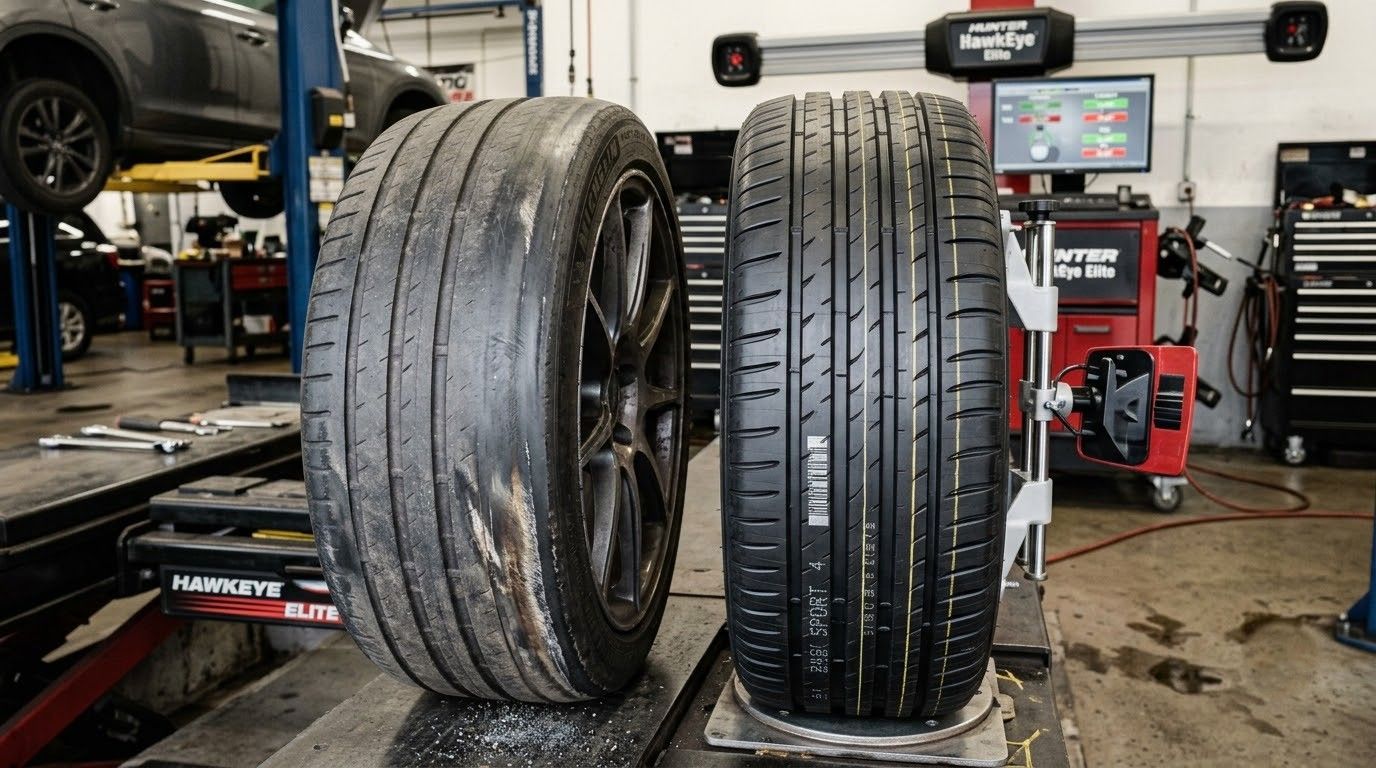
It does, and it is one of the clearest warnings. Failed dampers let a tire skip rather than track, producing scalloped cupping across the tread, while sagging springs change camber enough to grind away a single edge.
Why does my car dive forward when I brake?
Front dampers have lost their ability to control weight transfer. Braking shifts mass forward, and healthy struts resist that motion. Once they cannot, stopping distances lengthen and the front tires lose grip exactly when you need it.
Should shocks and struts be replaced in pairs?
Always across an axle. A fresh damper on one side and a tired one on the other makes the vehicle handle inconsistently through corners and under braking. Luke's Alignment & Auto Repair replaces them in pairs at our Chesterton, IN shop.
Is squeaking when I turn a suspension problem?
Frequently, yes. Dry or split bushings, worn ball joints, and failing strut mounts all squeak or groan through a turn. Pulling to one side while turning points at the same components, so both symptoms get inspected together.
Do I need an alignment after suspension repair?
Yes. Replacing struts, control arms, or springs changes the angles the wheels sit at, so Luke's Alignment & Auto Repair resets them on our rack in Chesterton, IN. Skipping it wastes tread on brand new tires.
Why does my vehicle sit lower on one corner?
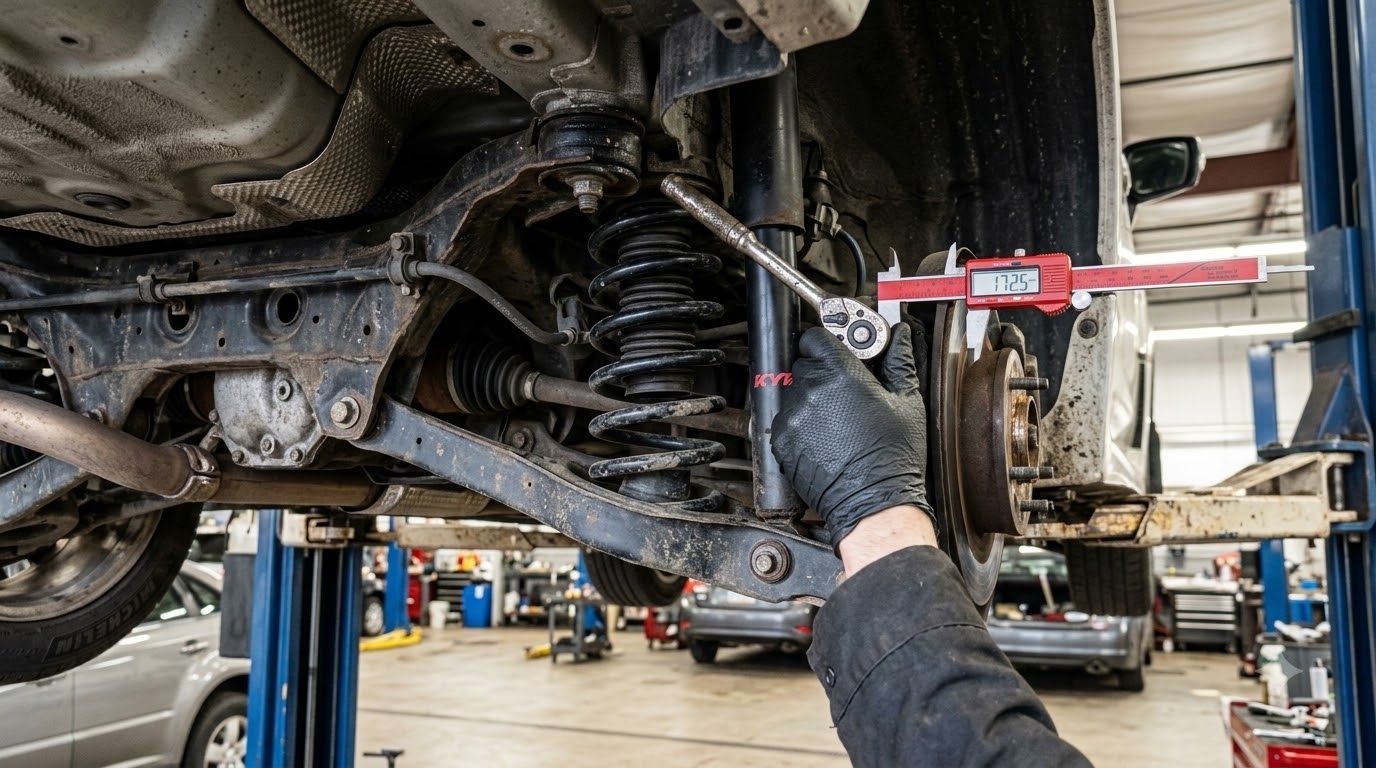
A broken or sagging coil spring is the usual answer, though a collapsed mount or bushing produces the same lean. Ride height gets measured at all four corners so the difference is a number instead of an impression.
Step-01
TELL US WHAT THE CAR IS DOING.
Step-02
DRIVE IT AND FEEL THE FAULT.
Step-03
LIFT IT AND INSPECT EVERYTHING.
Step-04
QUOTE THE COST AND THE TIME.
Step-05
REPLACE AND TORQUE TO SPECIFICATION.
Step-06
ALIGN IT AND PROVE THE FIX.
✓ Front and rear suspension examined together
✓ Springs, shocks, struts, and bushings
✓ CV joints, axles, and wheel bearings
✓ Stabilizing bar and power steering check
✓ Ride height measured at four corners
✓ Estimated cost and duration in writing