Short black horizontal line on a white background

BRAKE REPLACEMENT

Brake rotors typically give somewhere between 30,000 and 70,000 miles before they reach a wear limit, and salted Northwest Indiana winters push most vehicles toward the lower end of that range. Luke's Alignment & Auto Repair carries out brake replacement in Chesterton, IN. This page covers the components we replace, the OEM parts we fit, and why bedding new brakes in correctly matters as much as the hardware itself. Every job runs through a multi-point inspection and an upfront quote.
Two workers in hard hats crouch on a rooftop, working on the roof structure under a cloudy sky.
Person carrying wooden planks on a rooftop under a blue sky
REPLACEMENT IS A MEASUREMENT DECISION, NOT A GUESS.
Pads have a friction material thickness. Rotors have a minimum thickness stamped by the manufacturer and a runout tolerance. Drums have a maximum inside diameter. Each of those numbers decides whether a component is serviceable or finished, and we measure them rather than estimating by eye. Nothing gets condemned on appearance, and nothing borderline gets left on to fail later. Our multi-point inspection covers pads, rotors, drums, calipers, hoses, lines, the master cylinder, and fluid condition. You see the readings, and the quote lists parts and labor before any component comes off.
  • Pads, rotors, drums, and lines
  • Calipers and master cylinders replaced
  • OEM replacement components only
  • Upfront quote before work begins
Black horizontal line on a white background.
BRAKE REPLACEMENT
NEW BRAKES ARE ONLY AS GOOD AS THE PARTS FITTED.
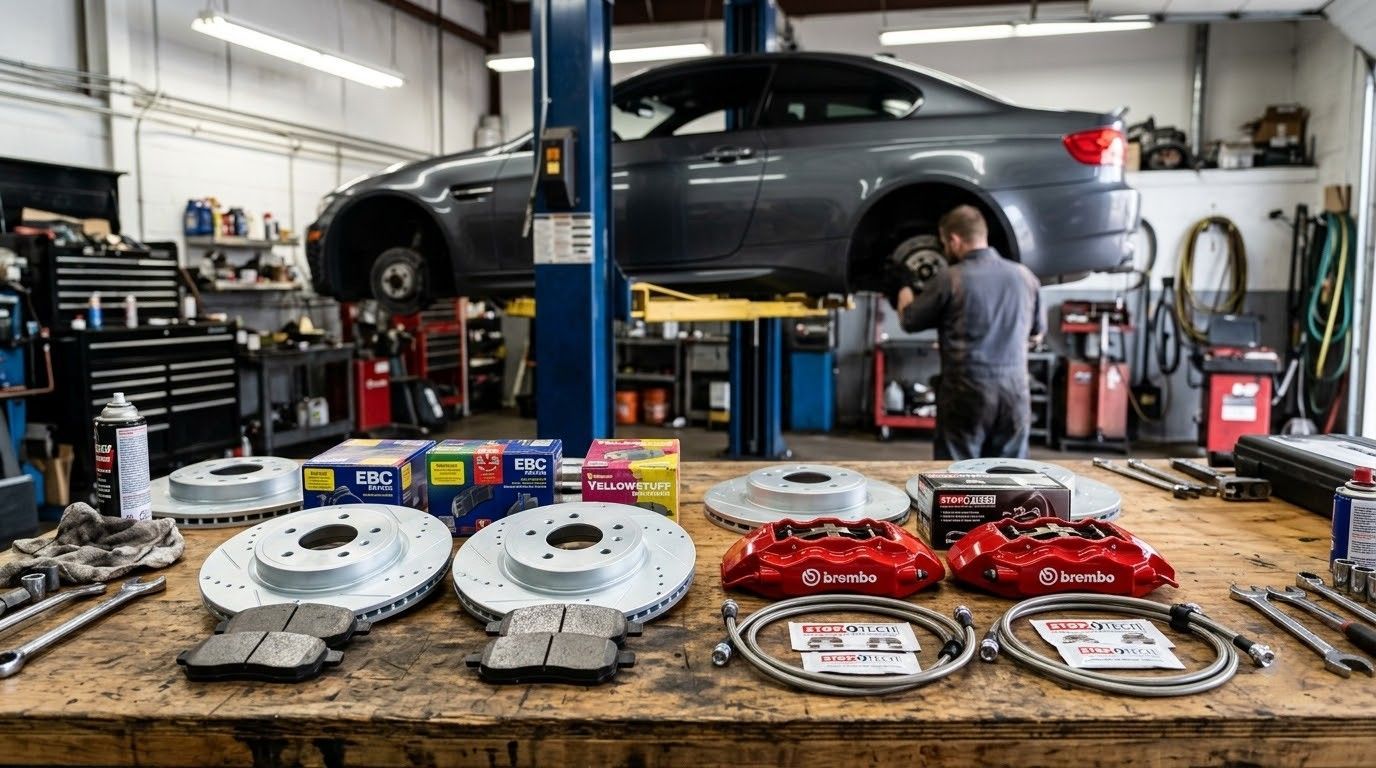
Cheap friction material fades under heat, and a budget rotor warps within a season of Duneland winter driving. We fit only high-quality OEM brake replacement components, matched to the vehicle rather than chosen for shelf price, because a brake job that has to be repeated is expensive twice over. Hardware, clips, and shims get renewed alongside the pads, since a seized slide pin will destroy a fresh set of pads inside a few thousand miles.
SALT BELT ROADS DECIDE WHEN BRAKE PARTS GIVE UP.
Road brine reaches everything underneath a vehicle here. Steel brake lines corrode from the outside in, caliper slides seize, rotor faces pit through a winter of standing wet, and drum hardware rusts solid. That is why a component list from a shop in a dry climate rarely matches what a Chesterton, Portage, or Valparaiso vehicle actually needs at replacement time. We inspect for corrosion first.
NEW PARTS DESERVE A PROPER BED IN.
Fitting brakes is the straightforward half. Bedding them in, transferring an even layer of friction material onto a fresh rotor face through a controlled sequence of stops, is what stops the judder and squeal that follow a rushed job. After 40 years we do not skip it, and we do not hand back a vehicle whose pedal we have not tested ourselves. When did your brakes last get measured properly?
WHY CHOOSE US FOR BRAKE REPLACEMENT.
Black car on a car lift icon
OEM Components Only
Every replacement part meets the highest industry standards rather than the lowest available price. Friction material, rotors, drums, lines, and cylinders are specified to the vehicle so braking matches the factory.
Black car on a car lift or jack icon
Measured, Not Guessed
Pad thickness, rotor thickness, runout, and drum diameter are recorded against manufacturer limits. You see numbers, so the decision to replace a component is verifiable instead of a matter of opinion.
Black car on a lift or jack stand icon
Bedded In Before Handover
Fresh pads and rotors go through a proper bedding sequence before the keys come back. Skipping it causes uneven deposits, vibration through the pedal, and noise that gets blamed on the parts.
Black car icon on a car lift
Warranty Behind The Work
Extended warranties are available on brake work, and our technicians are licensed and insured. Satisfaction guaranteed means we stand behind the components fitted and the labor that put them there.
Black car on a car lift or jack stand icon
Quoted Before We Start
An upfront quote covering parts and labor arrives before anything is removed. Free estimates, competitive rates, and no additional components appearing on the invoice without a conversation first.
Black car icon on a car lift, symbolizing vehicle maintenance or inspection
Turnarounds You Can Plan
Most brake replacements finish the same day, and we give an honest completion time at booking. On-time service matters far more than a fast promise that nobody actually keeps.
Black horizontal line on a white background

our services

OUR BRAKE REPLACEMENT WORK
Failures arrive component by component, so replacement is rarely all or nothing. Below is what we replace, from a single set of pads through to an entire braking system renewed end to end.
Person carrying wooden planks on a rooftop under a blue sky
PAD SWAP
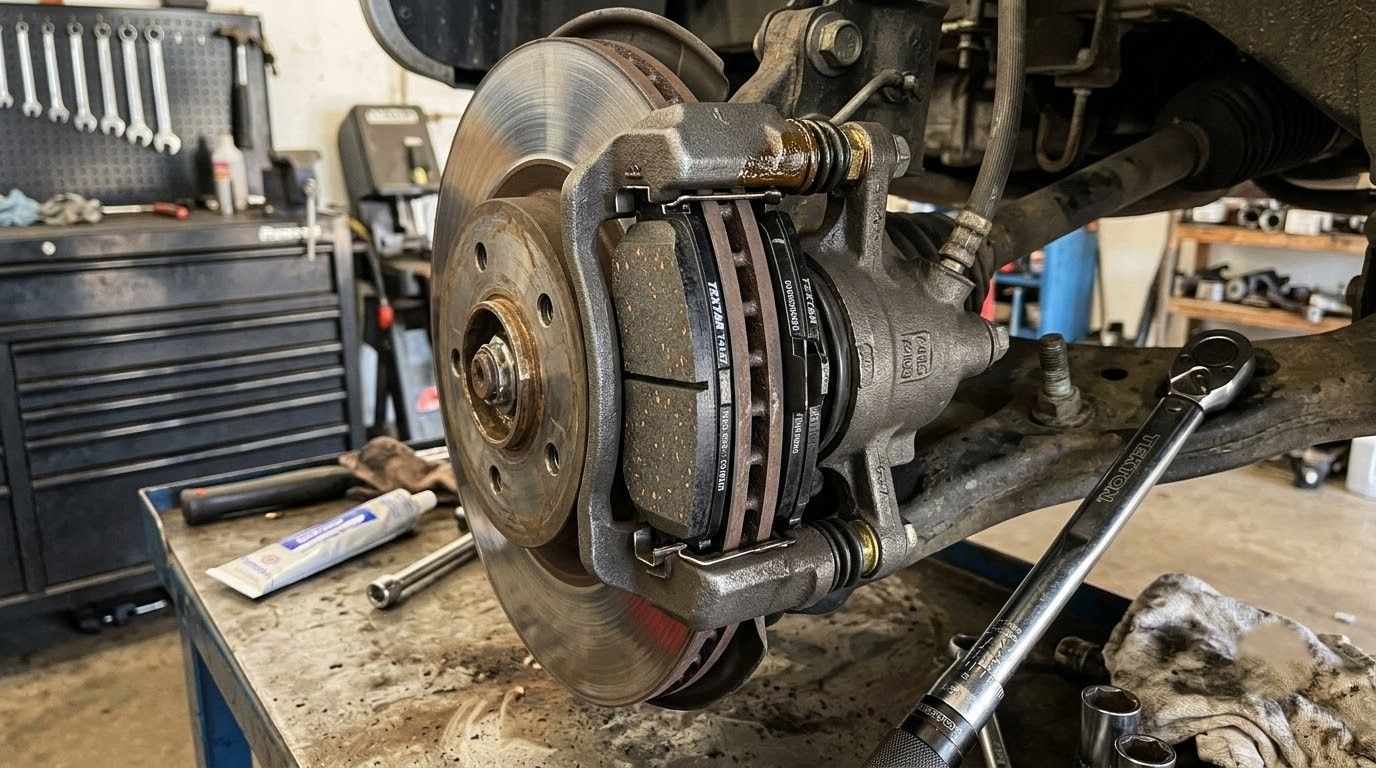
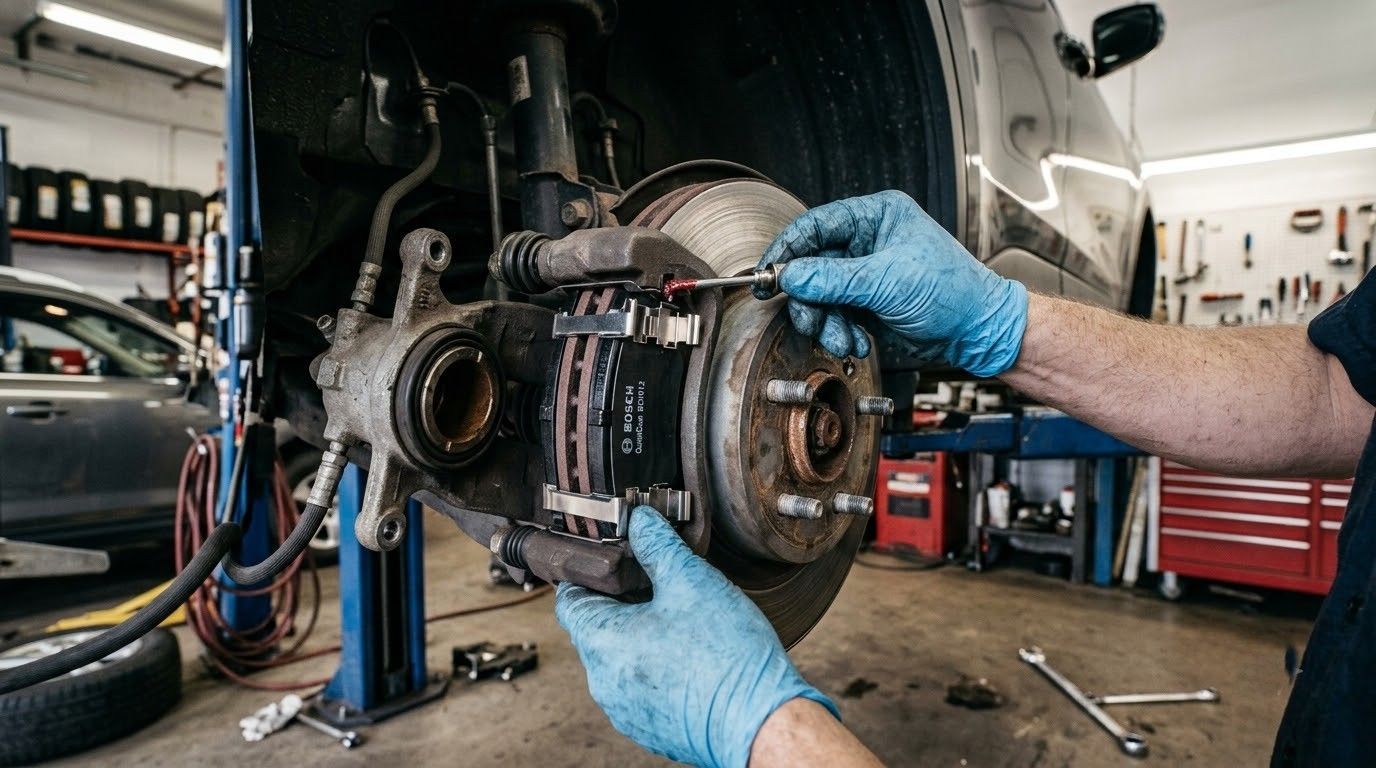
Brake Pad Replacement

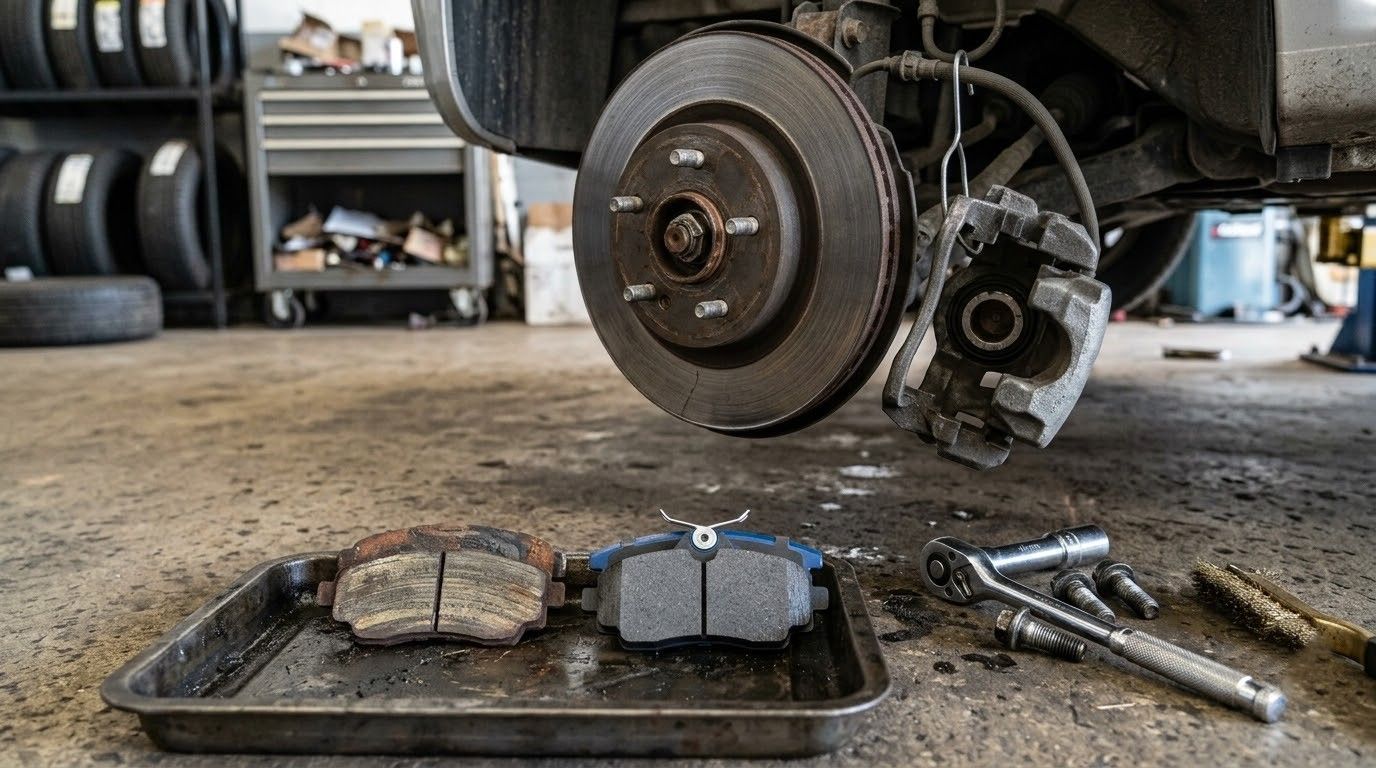
Friction material wears until it approaches its minimum, then stops shedding heat properly. We fit OEM pads with new hardware and clips, clean and lubricate the slide pins, and confirm even contact across the rotor face.
Two workers in hard hats repairing a shingled roof under a cloudy sky.
ROTOR CHANGE
Brake Rotor Replacement

Rotors thin with every stop and pit badly through a salted winter. Once thickness or runout falls outside specification, resurfacing is not an option, so a matched pair goes on to keep braking balanced across the axle.
Two roofers wearing hard hats work on a shingled roof, one kneeling and one leaning forward.
DRUM WORK
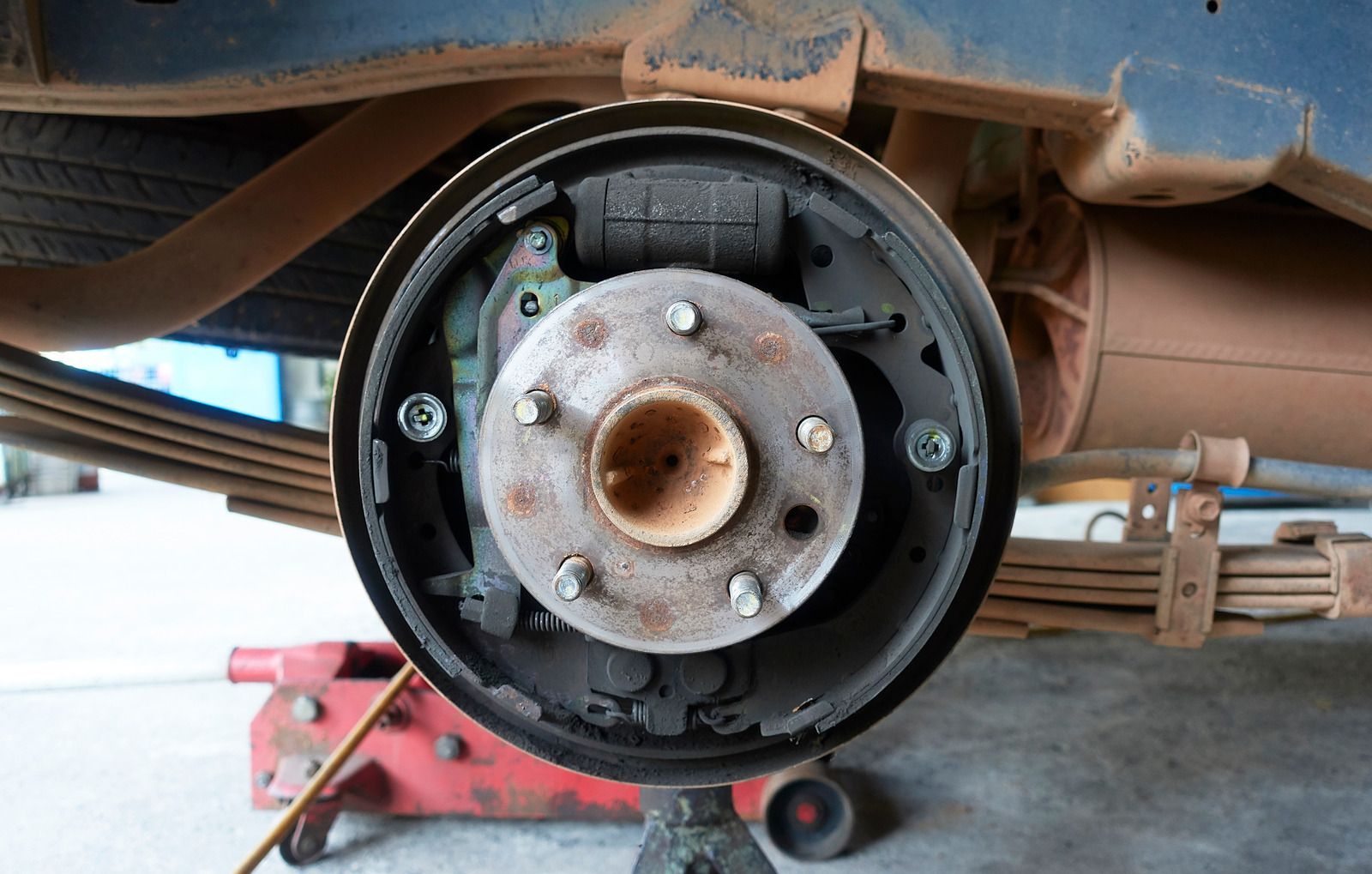
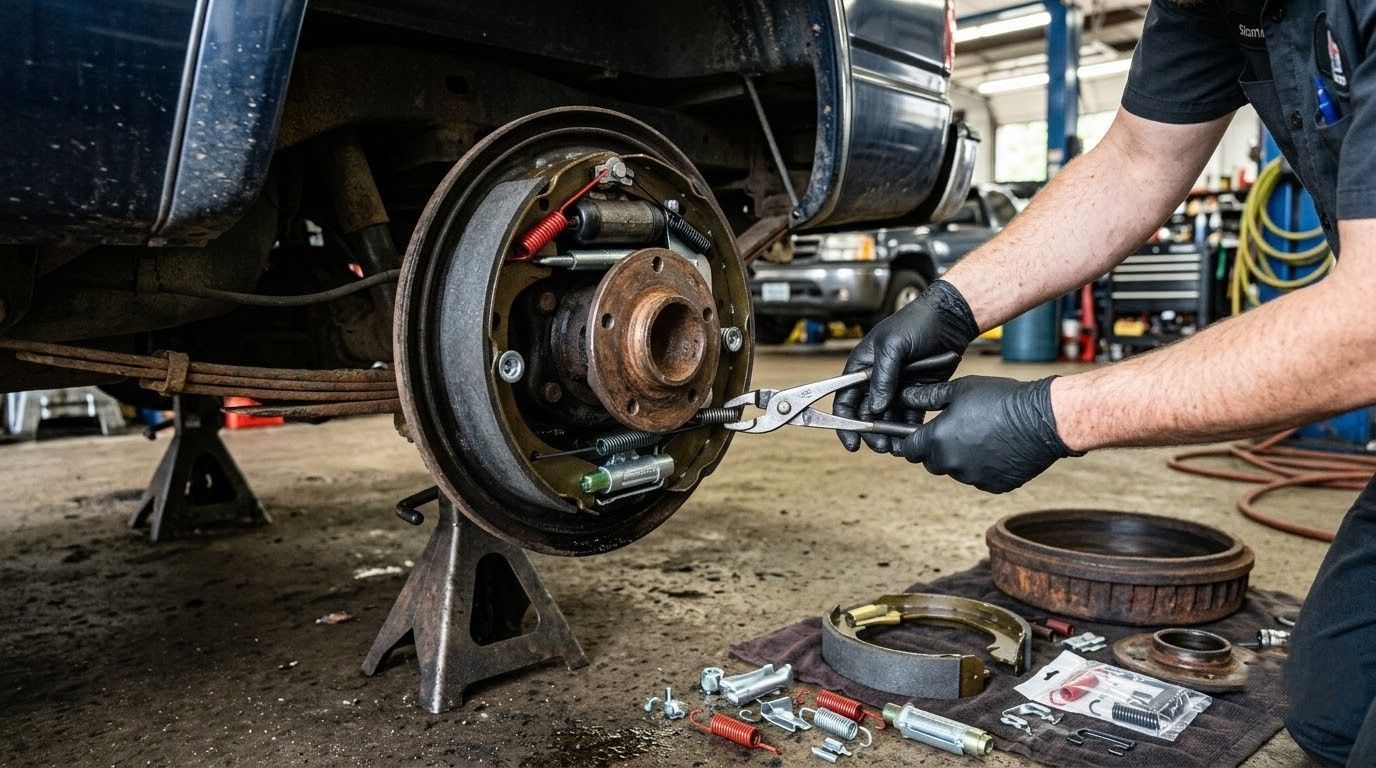
Brake Drum Replacement

Rear drums wear from the inside out until their diameter exceeds the maximum allowed. Replacement includes new shoes, springs, and adjusters, because worn hardware inside a fresh drum simply repeats the problem within a year.
House roof with steam or smoke rising from a damaged section near the gutter
LINE RENEWAL
Brake Line Replacement

Corroded steel lines and swollen flexible hoses are a genuine safety issue in the salt belt. We replace affected sections, route and secure them correctly, then bleed the system and pressure test before anything moves.
Two workers on a shingled roof, one kneeling with a hammer and one sitting nearby under a cloudy sky
CYLINDER SWAP
Master Cylinder Replacement

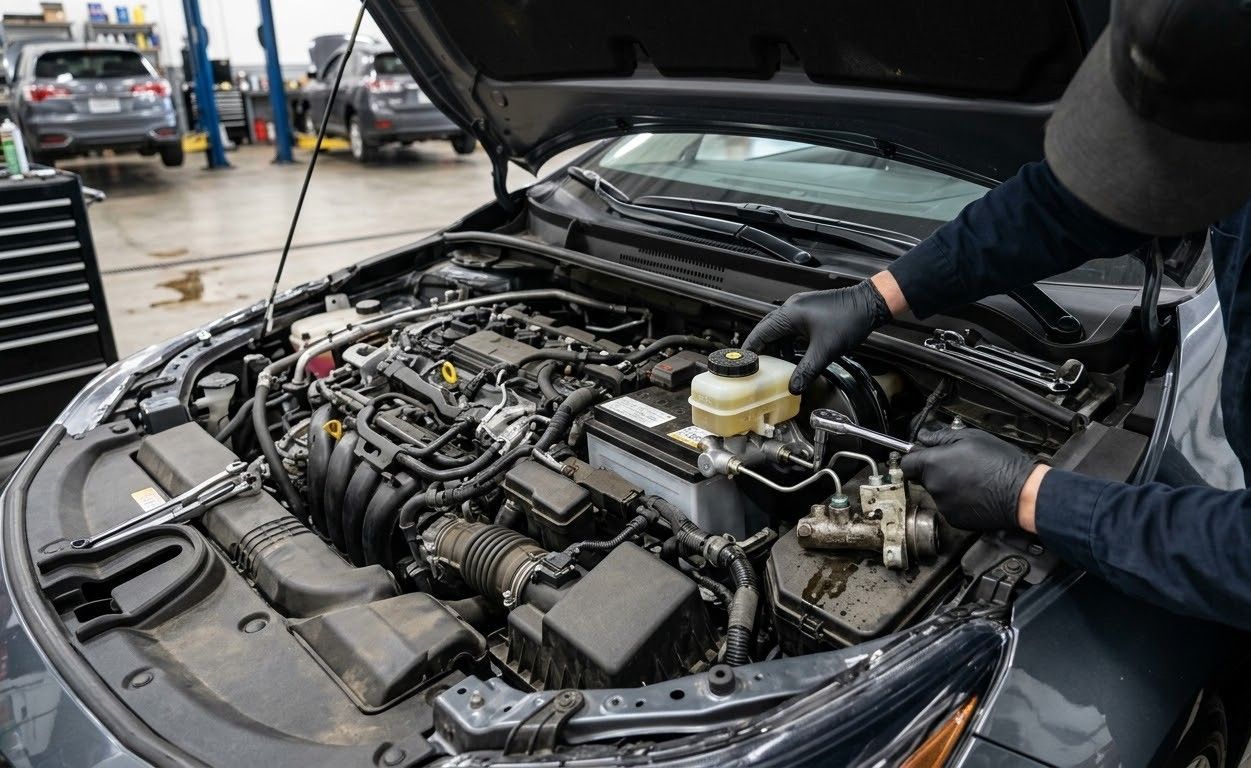
When the pedal sinks slowly under steady pressure, internal seal failure is the usual cause. Replacement includes bench bleeding the new cylinder, a full system bleed, and fresh fluid, since old fluid carries moisture that damages components.
Snow-covered rooftops under a clear blue sky
FULL SET
Full Brake Replacement

Some vehicles need the whole system renewed at once: pads, rotors, drums, calipers, hoses, lines, and fluid together. Doing it as one job restores balanced braking and costs less than four separate visits would.
Black horizontal rounded bar on a white background

THE WORD ON OUR WORK

WHAT OUR CLIENTS SAY.
Feedback about brake jobs tends to be short and specific. The pedal feels firm, there is no squeal on the first cold morning, the quote given at booking matched the final invoice, and the vehicle was finished when we said it would be.
Black horizontal line on a white background
Common Questions
FREQUENTLY ASKED QUESTIONS.
These come up most often once a driver knows something is being replaced rather than repaired. Our contact page reaches us directly if your question is not covered.

Why are my brakes squealing, and how do I stop it?

Usually a rusted rotor face, pads worn near their limit, or a habit of braking hard. A thorough diagnostic identifies which of the three is responsible and points straight at the repair that actually cures it.


Do rotors have to be replaced with the pads?

Only if measurement says so. Rotors within thickness and runout specification can keep a fresh set of pads. Luke's Alignment & Auto Repair replaces them in Chesterton, IN once either figure falls outside published limits.


What does bedding in new brakes actually do?

It transfers an even film of friction material onto the rotor face through a series of controlled stops. Without that layer, deposits build unevenly, which produces judder through the pedal and noise drivers blame on the pads.


How long should new brake pads and rotors last?

Expect 30,000 to 70,000 miles from rotors, with pads varying more widely depending on traffic and driving style. Stop-start commuting and heavy winter braking shorten both, which is why a check every 10,000 miles matters.


Can brake drums be replaced on their own?

Technically, though it is rarely wise. Shoes, springs, and adjusters inside an old drum are usually worn to a similar degree, so fitting a new drum around tired hardware brings the same complaint back quickly.


Why would a brake line need replacing?

Corrosion is the main reason in this region. Road brine attacks steel lines from the outside, and a flexible hose can swell internally, restricting flow. Either failure risks a sudden loss of pedal, so replacement is not optional.


What are the signs of a failing master cylinder?

A pedal that slowly sinks toward the floor under constant pressure, or one that feels spongy after bleeding, points there. Luke's Alignment & Auto Repair tests and replaces master cylinders at our Chesterton, IN shop.


Do calipers get replaced during a brake job?

Not always. Calipers that slide freely and hold no leaks can be cleaned, lubricated, and reused. A seized piston, a torn boot, or a leaking seal means replacement, since a dragging caliper ruins new pads fast.


    Black horizontal line on a white background.
    HOW WE WORK
    FROM MEASUREMENT TO BEDDED-IN BRAKES.

    Step-01

    MEASURE EVERY BRAKING COMPONENT.
    Wheels come off and a multi-point inspection records pad thickness, rotor thickness and runout, drum diameter, caliper condition, hose condition, line corrosion, and fluid state. Advanced diagnostics confirm anything the physical inspection leaves in question.

    Step-02

    QUOTE THE PARTS AND LABOR.
    You receive an upfront quote naming each component, its cost, and the labor involved before a single bolt is turned. Anything still inside specification is listed as passing so you know what was checked.

    Step-03

    STRIP AND CLEAN THE CORNERS.
    Old components come off and the mounting surfaces get cleaned back properly. Rust on a hub face throws a new rotor out of true immediately, so this step decides whether the replacement runs straight.

    Step-04

    FIT OEM REPLACEMENT COMPONENTS.
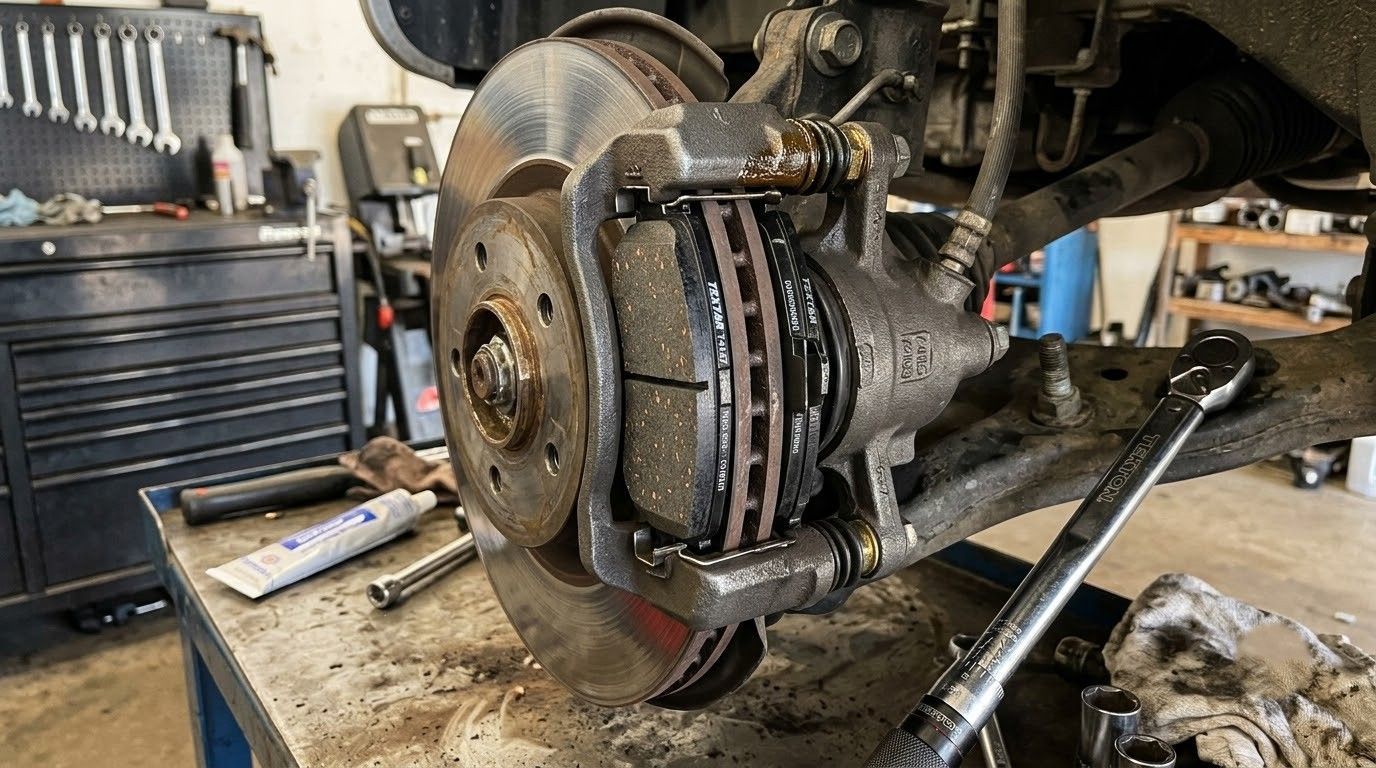
    New parts go on torqued to the manufacturer's figures, with fresh hardware, clips, and shims. Slide pins are lubricated, and every fastener is checked, because a brake job fails at its details far more often than its parts.

    Step-05

    BLEED AND PRESSURE TEST.
    Clean fluid replaces old, the system is bled until the pedal firms up, and every joint gets checked under pressure. Moisture in aging fluid lowers the boiling point, so it goes rather than getting topped up.

    Step-06

    BED THE NEW BRAKES IN.
    Controlled stops in a measured sequence lay an even transfer layer onto the rotors. The vehicle then gets a road test, and it stays with us until the pedal feels right and the brakes pull straight.
    Thin black horizontal line on a white background
    GET YOUR FREE ESTIMATE
    GET YOUR BRAKE REPLACEMENT QUOTED, FREE.
    Worn braking components rarely improve on their own, and a thin rotor becomes a caliper problem soon enough. Send the symptom and your mileage through our contact page or quote form, and we will measure everything before quoting a part.
    WHAT YOUR QUOTE COVERS:

    ✓  Pad, rotor, and drum measurements recorded

    ✓  Caliper, hose, and line condition noted

    ✓  Brake fluid tested for moisture

    ✓  Every replacement part listed separately

    ✓  Labor and turnaround stated up front

    ✓  Extended warranty options explained