MUFFLER REPAIR
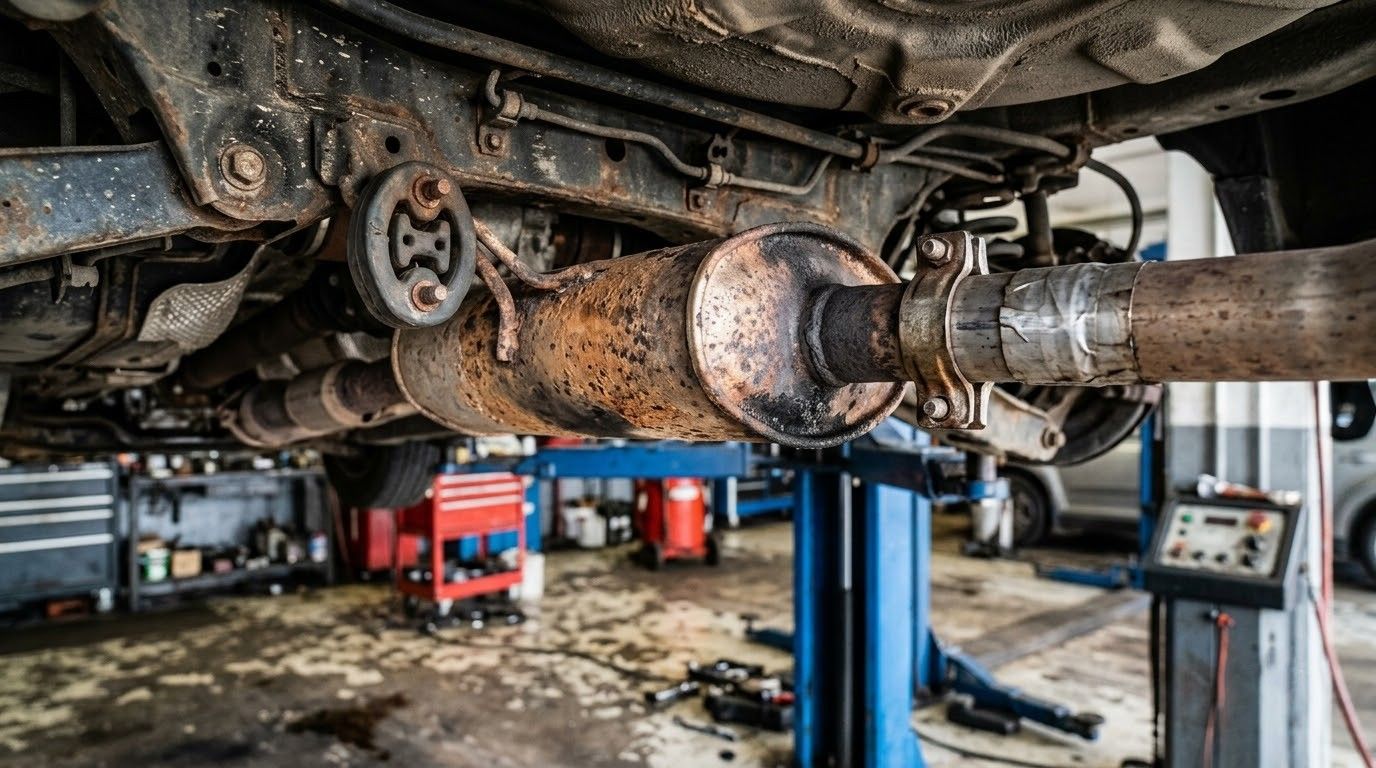
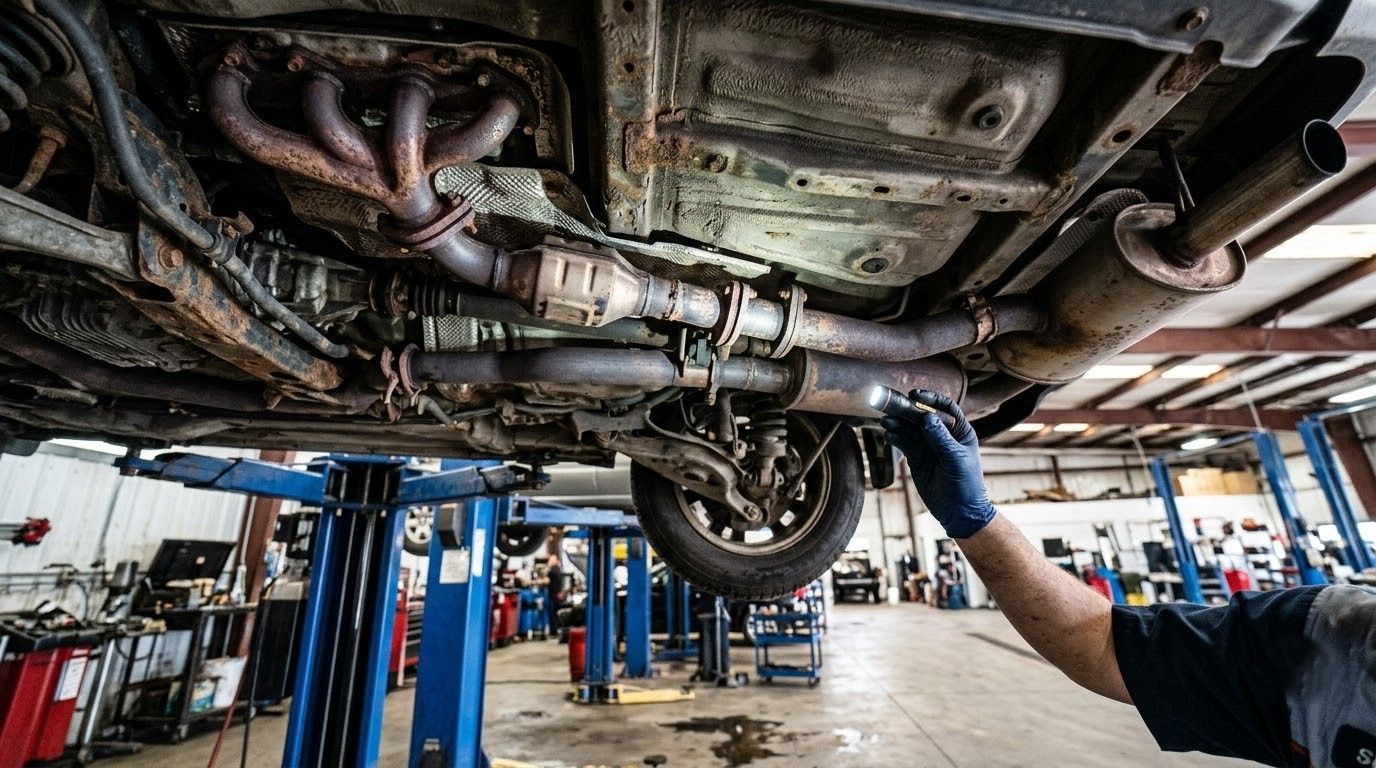
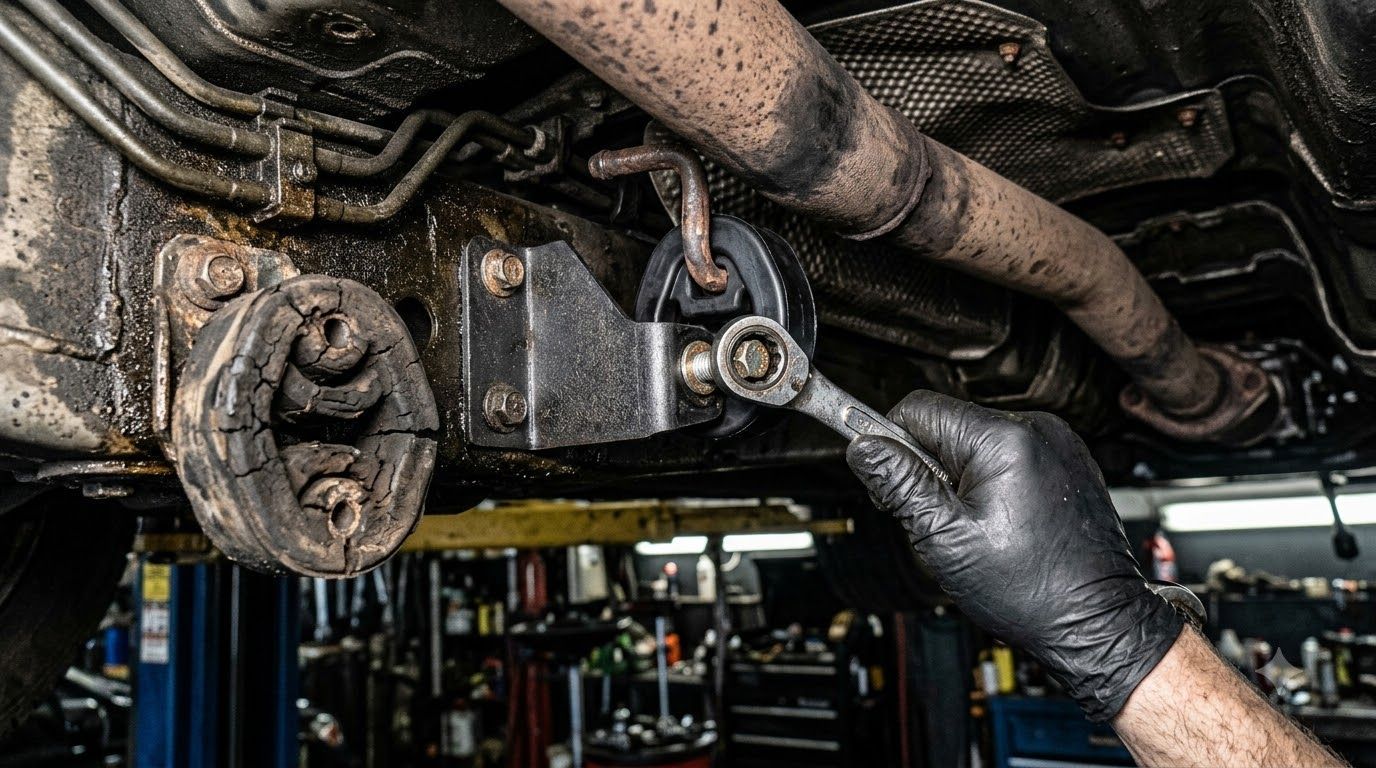
- Mounts verified and secured
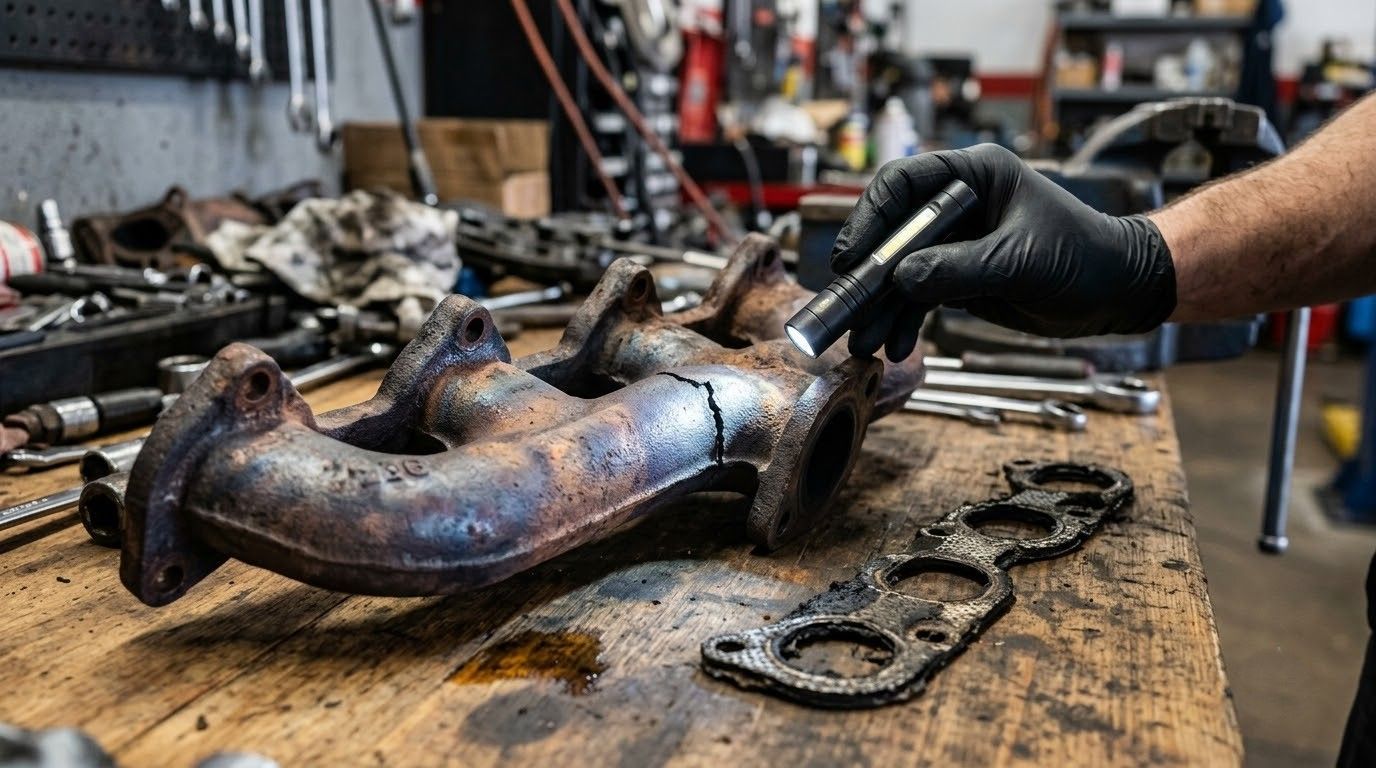
- Manifolds checked for cracks
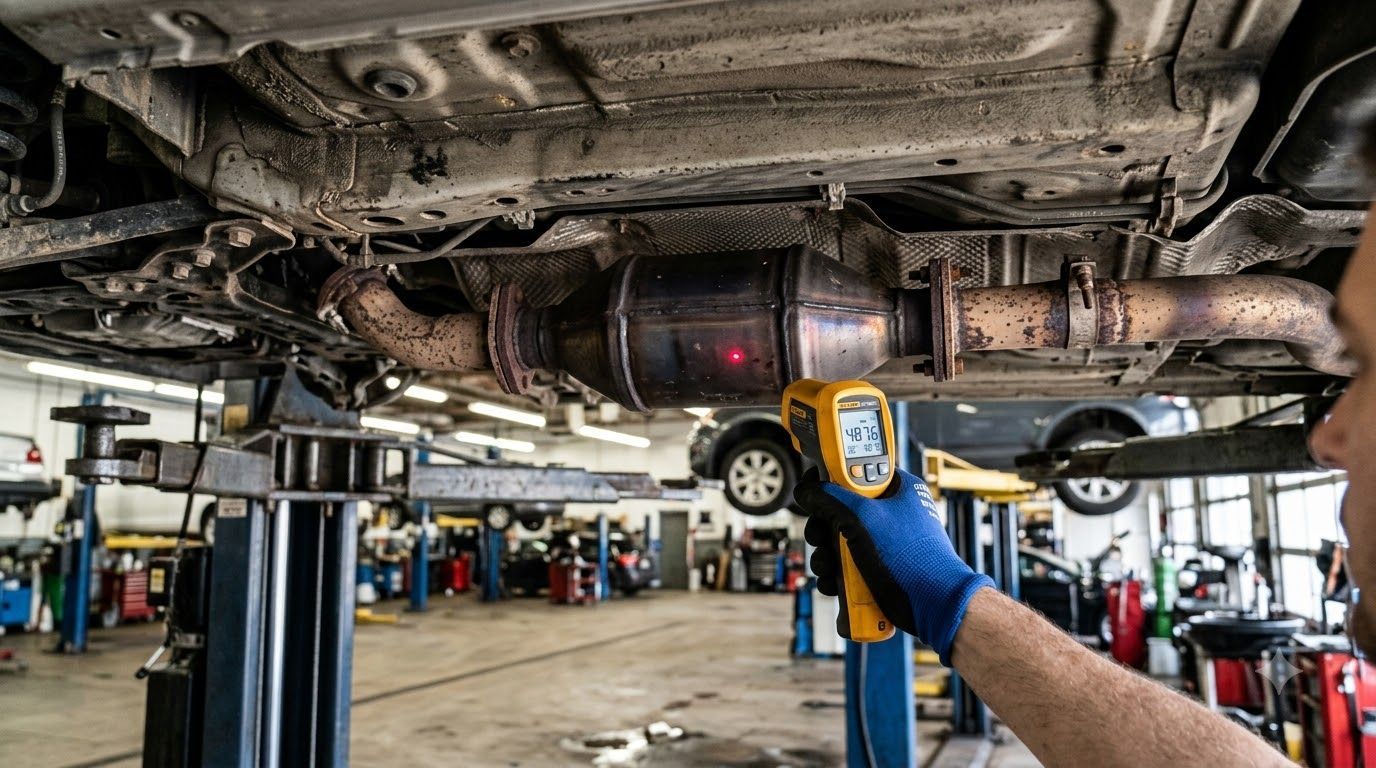
- Catalytic converter efficiency assessed
- Air sensor condition reported
our services
THE WORD ON OUR WORK
Why is my car suddenly louder than normal?
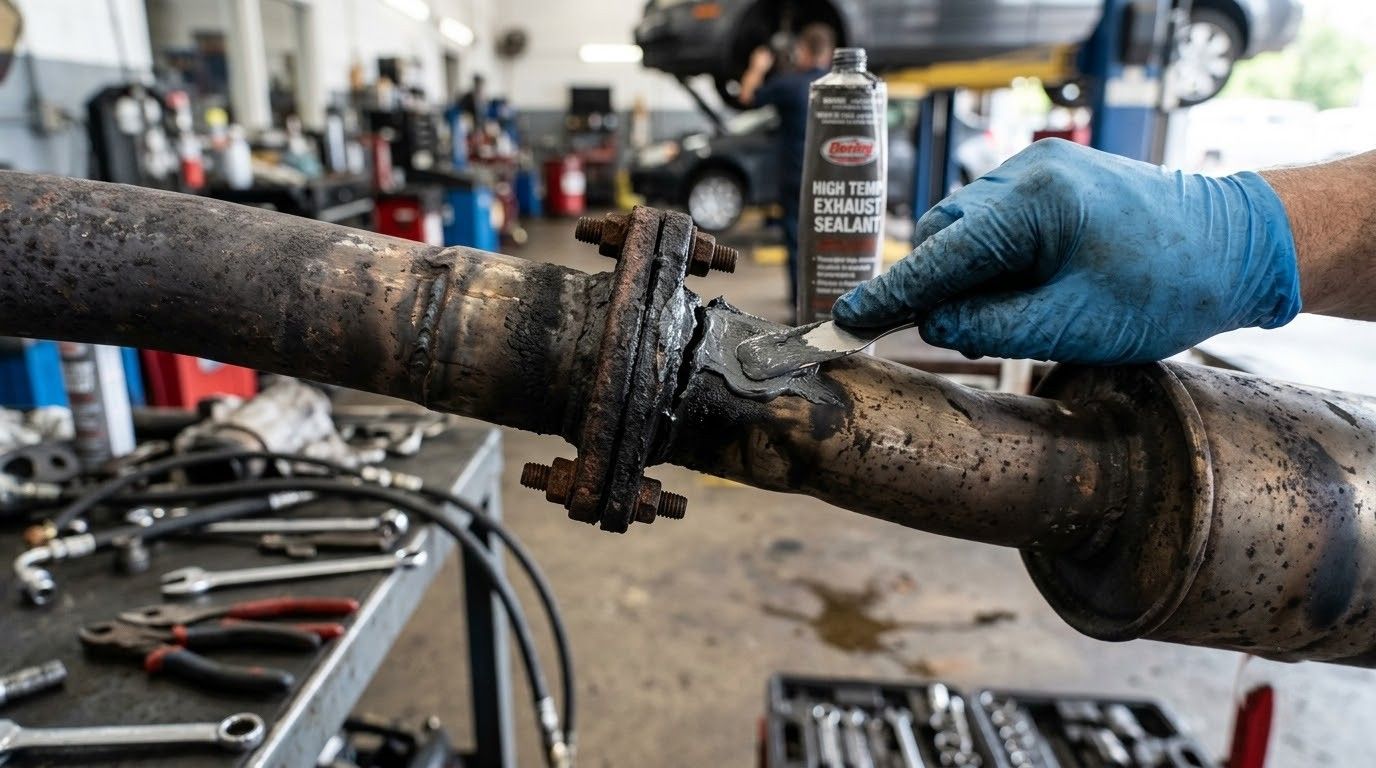
Something in the exhaust has opened up. A blown gasket, a cracked flex joint, a rusted seam, or a hole in the muffler shell all let gas escape early, and escaping gas is what you are hearing.
Can a muffler be repaired instead of replaced?
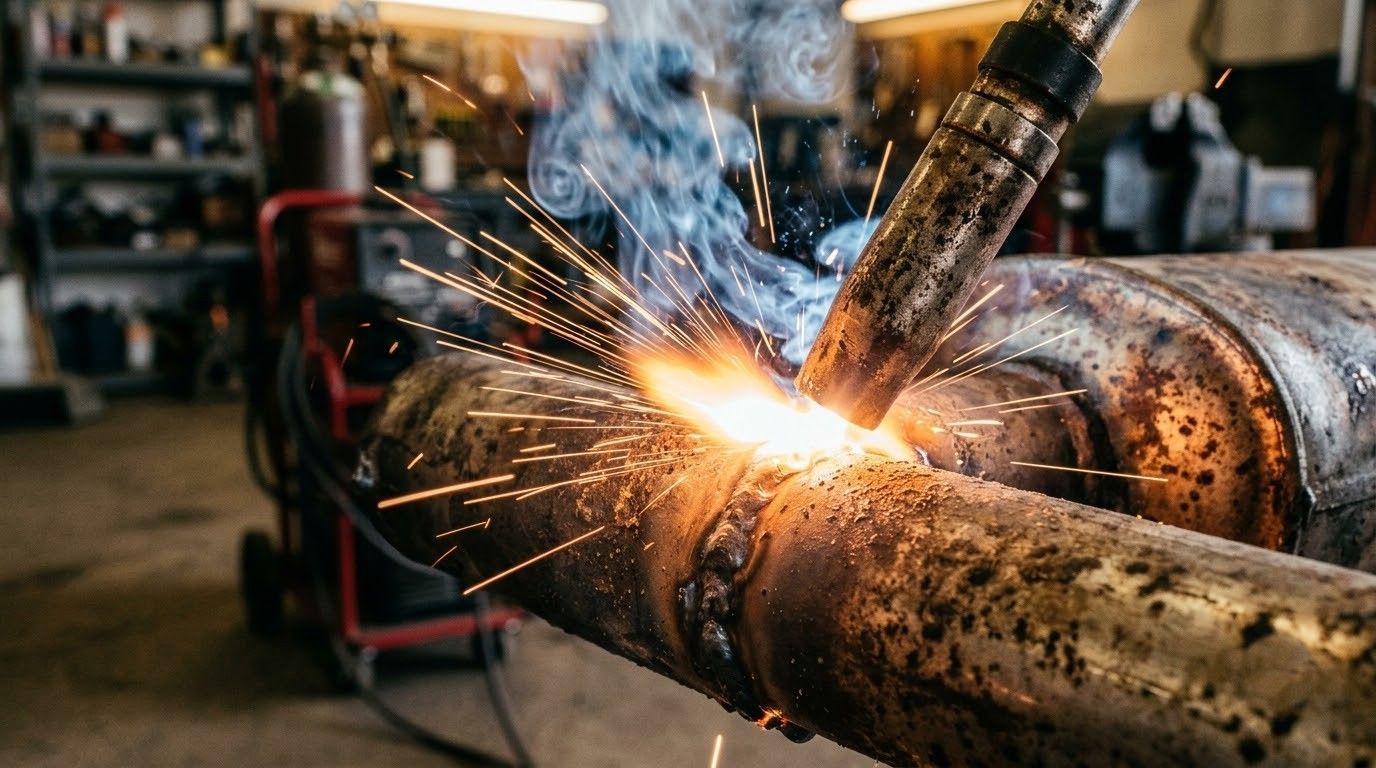
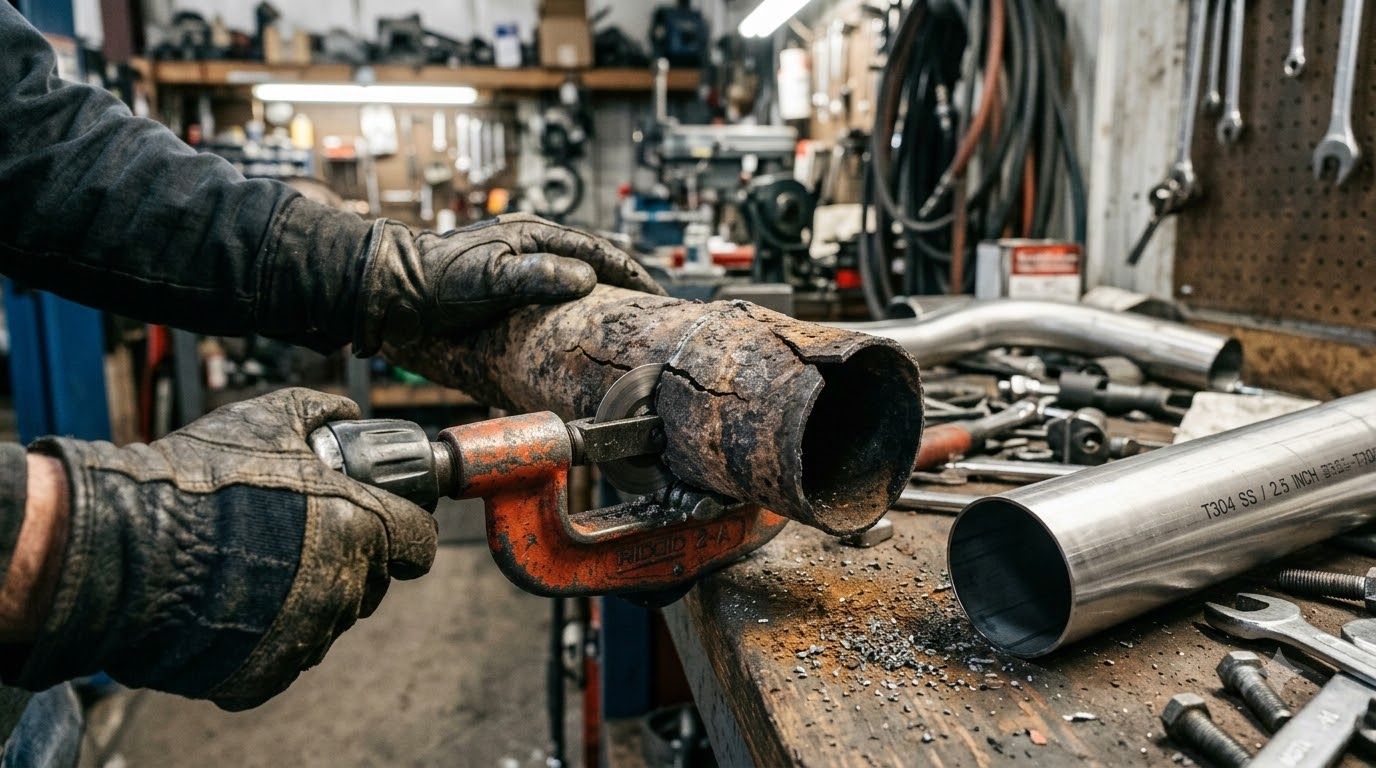
Often it can. A cracked seam, a failed weld, or a damaged inlet pipe can be repaired where the surrounding shell is still solid. A muffler rusted thin throughout will not hold a repair.
Can an exhaust problem cause a failed emissions test?
Yes, frequently. A leak ahead of an oxygen sensor lets outside air in and skews the readings the test relies on. Luke's Alignment & Auto Repair inspects for exactly that in Chesterton, IN.
Is it safe to drive with an exhaust leak?
Not for long. A leak ahead of the cabin can push carbon monoxide inside, and it also changes fueling in ways that damage the converter over time. Get it located quickly.
What does a rattle under the car usually mean?
Three things account for most of them: a broken hanger letting the system contact the floorpan, a loose heat shield, or the internal substrate of a catalytic converter breaking apart inside its shell.
What is included in a full exhaust system inspection?
Mounts, manifolds, pipes, seams, the muffler, air sensors, and the catalytic converter all get assessed for wear, rust, and leaks. Luke's Alignment & Auto Repair carries this out for drivers throughout Chesterton, IN.
How long does an exhaust system last in this climate?
Less time than the manufacturer intended. Road salt shortens the life of pipes, mufflers, and hangers considerably, which is why an annual look underneath catches thinning metal before it opens into a hole.
Do air sensors need checking during exhaust work?
They do. Sensors sitting in the gas stream age, foul, and slow down, which affects both fueling and emissions readings. Assessing their condition alongside the pipework avoids fixing one problem and leaving another.
Step-01
Listen to the Vehicle With You
Step-02
Run the Diagnostic Assessment
Step-03
Put It on the Lift and Look
Step-04
Pressure Test for Escaping Gas
Step-05
Quote the Repair, Not the System
Step-06
Repair, Secure, and Road Test
WHAT YOUR EXHAUST QUOTE COVERS:
✓ Diagnostic assessment before the lift
✓ Rust and corrosion mapped by section
✓ Mount and hanger condition verified
✓ Manifold and air sensor assessment
✓ Catalytic converter efficiency check
✓ Repair scope limited to failed parts